When Someone Shouts, Why Do You Freeze and Go Completely Silent?
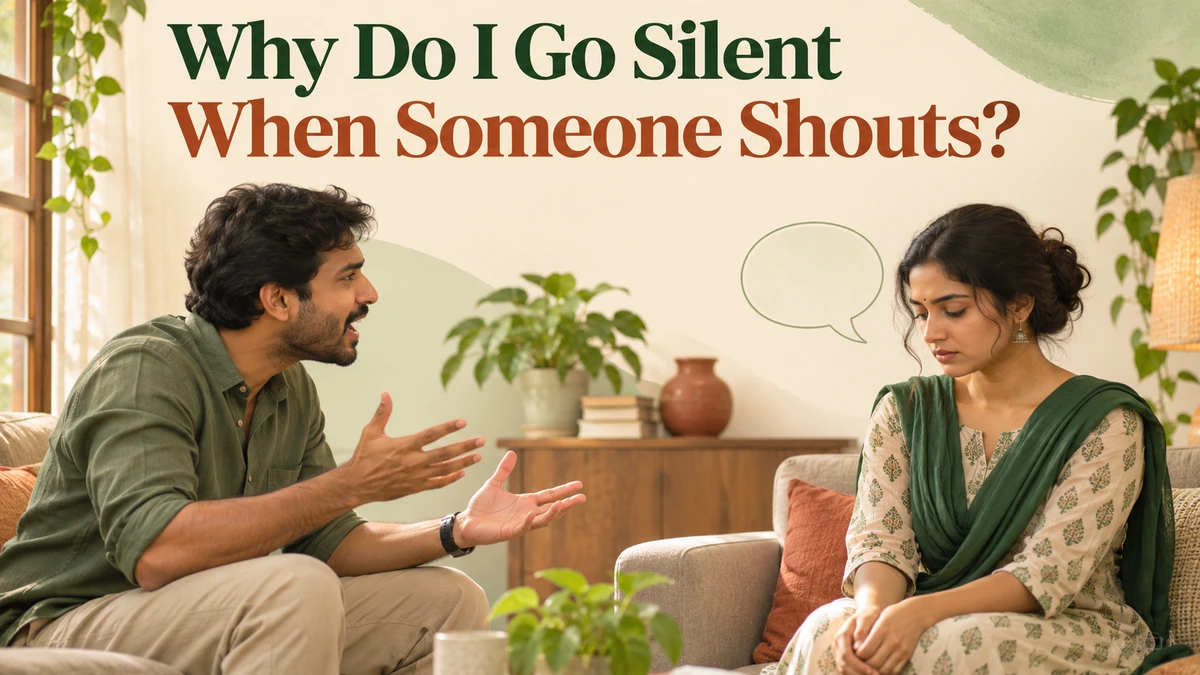
“Why do I freeze when someone yells at me?” is a reasonable question, especially when the right words come to you an hour later. Going silent can be a response to stress or fear, but it can also reflect surprise, an old conflict habit or a deliberate choice not to escalate. It does not prove that you were wrong, weak or traumatised. This PsyQuench article follows what happens in the moment, why it may occur more with some people, and what you can do when speaking immediately does not feel possible. If shouting is part of ongoing intimidation or threats, safety matters more than finding a clever reply.
The Moment Your Words Suddenly Disappear
An argument begins. Someone raises their voice. You know the point you wanted to make, yet your mind seems to narrow to getting through the next few seconds. You may look down, become very still, cry, or say nothing. Later, when you are alone, your reasons sound clear again. This example describes a familiar experience; it is not a diagnosis of what happened inside your body.
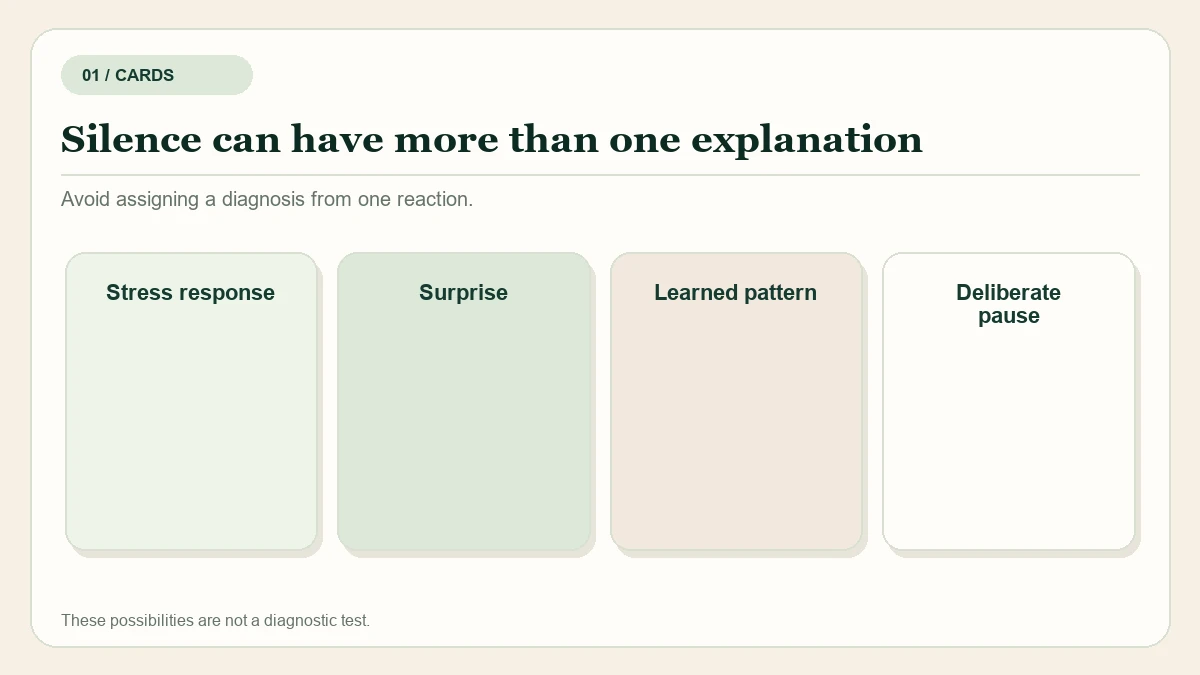
Silence can mean many things to an observer. They may think you agree, have no answer or are choosing to ignore them. You may be doing none of those. You may be trying to think while your attention is on the other person’s volume and tone. That mismatch can be frustrating: the conversation ends with the issue unresolved, and you feel as though your inability to speak became the argument.
The first step is to name the experience accurately for yourself. “I went quiet when the shouting started” is more useful than “I always fail at arguments.” It identifies a moment and a condition. That gives you something to explore without turning one reaction into a judgment about your character.
Why Shouting Can Trigger a Stress Response
A raised voice may signal urgency, anger or possible danger. People do not respond to it identically. One person talks faster, another becomes angry, and another goes quiet. Research has observed human defensive freezing under laboratory stress, and a review of defensive responses describes distinct states such as freezing and tonic immobility. These findings establish that defensive responses exist. They do not establish that every person who stops speaking during an argument is in a specific physiological state.
Your response also depends on the situation. A loud conversation with someone you trust can feel different from being shouted at by a person who controls your job, home or safety. The history of the relationship matters, as does what is happening today. If you have learned that speaking up tends to make an argument louder, silence may be an understandable attempt to avoid escalation, whether or not it fits a clinical term.
The question “Why did I do that?” therefore needs context rather than a single nervous-system slogan. The body may react to perceived threat; the mind may be choosing caution; both may be involved. Understanding that range is more useful than assigning yourself a trauma label from a short online description.
How Stress Can Make Speaking Difficult
Speaking in an argument asks you to listen, understand, remember your point and choose words while monitoring the other person’s reaction. When the interaction feels threatening or overwhelming, those tasks can become harder to manage. You may know what you think in a calm room but struggle to organise it under pressure. That does not mean the point has disappeared; it means the conditions for saying it have changed.

There is also a difference between being unable to find words and choosing not to speak because the moment is unproductive. Both may result in silence, but they call for different responses. If you chose a pause, you might later decide how to return to the topic. If you felt unable to speak, it may help to notice early signs and plan a shorter phrase you can use next time. If you felt unsafe, the priority may be leaving or seeking support, not continuing the discussion.
Clinical terms need care here. “Tonic immobility” refers to a more specific defensive state, and “dissociation” has meanings that cannot be inferred from one silent argument. A review of PTSD and dissociation shows why these concepts require nuance. An article can explain possibilities; it cannot assess your individual reaction.
Why It Happens More With Certain People
You may be able to disagree calmly with a friend yet fall silent with a parent, manager or partner. That pattern suggests the relationship deserves attention. Perhaps the person interrupts, dismisses or becomes louder when challenged. Perhaps you expect disappointment from them, even when they are not currently shouting. Perhaps their authority over work or housing makes the consequences of disagreement feel high.
This does not automatically mean the relationship is abusive or that a childhood event caused the response. Ask more specific questions. How often does this person shout? What happens when you speak? Can they later discuss the issue calmly? Do you feel free to leave a conversation? How does your body react before the volume rises? Your answers may reveal whether the main difficulty is a communication pattern, a fear of consequences or a safety concern.
Patterns with family can be especially layered because the same people have known us in different roles for years. PsyQuench’s article on relationship conflicts in Indian families explores that setting in more detail. For this article, the key point is that a response that appears “irrational” in isolation may make more sense when you look at who is involved and what has happened before.
Why the Right Words Come After the Argument
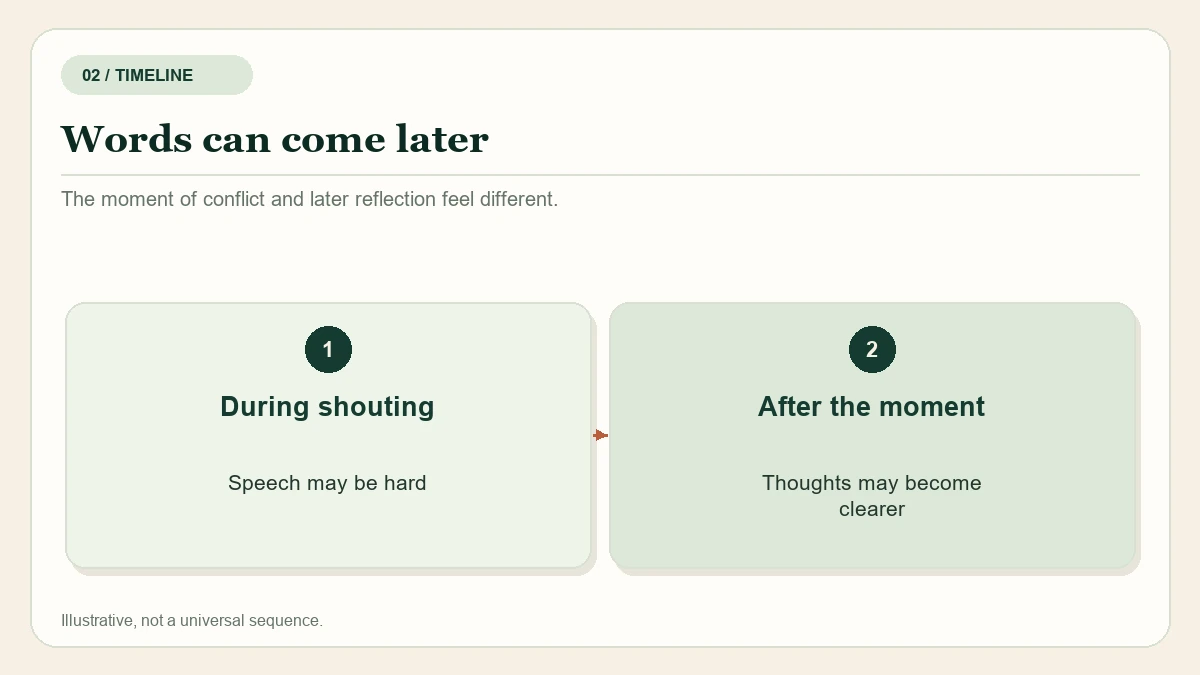
When the pressure has passed, you have time to sort what was said and what you meant. You may replay the exchange and discover that you did have a clear objection. That delayed clarity does not make the original silence a choice or a failure. It also does not prove a specific brain mechanism. It simply shows that a calmer setting can make reflection easier than a loud, fast-moving conversation.
You can use the later clarity without needing a perfect comeback. Write down your point in one or two sentences. Decide whether it still needs to be said, and whether saying it to that person is safe and useful. If it does, a message such as “I could not respond while we were shouting. My concern is…” may be more effective than rehearsing the whole argument. If the relationship is unsafe, putting an objection in writing may not be the right step; seek appropriate support instead.
Try not to punish yourself for the clever sentence that came too late. Conversations are not exams in which only an immediate answer counts. What matters is whether there is a workable way to address the issue and whether the other person can participate without intimidation.
How This Pattern Can Affect Your Confidence
Repeated silence can make you dread future disagreements. You may begin to assume that you cannot stand up for yourself, even if you communicate well in other settings. You might avoid raising an important issue because you expect the other person to overpower the conversation. Over time, the topic remains unresolved and your confidence becomes tied to how well you perform under shouting.
This is a reason to change the conditions of the conversation rather than demanding that you become better at arguing while being yelled at. You may speak more clearly when you agree to discuss one issue at a time, choose a calmer moment or write down the point in advance. A receptive person can help by lowering their voice and allowing a pause. An unreceptive person may require firmer boundaries or outside support.
Notice what happens after you attempt a different approach. Does the person make room for your view? Do they respect a pause? If not, the problem is not solely your confidence. A communication strategy cannot fix another person’s repeated refusal to let you speak.
Recognizing the First Signs of Freezing
If the response happens often, observe the first few seconds rather than only the aftermath. You may notice your jaw tightening, breath changing, attention narrowing or a strong urge to look away. Another person may notice different signs. These observations are not a diagnostic checklist. They are cues that the conversation is becoming hard for you to manage.
Try a small, realistic response at the first cue. You might place both feet on the floor, ask for a moment or say a prepared sentence such as “I want to talk about this, but I need us to lower our voices.” If even that sentence is too much, leaving briefly may be the best available option where it is safe. You do not have to be able to deliver a polished explanation in the very moment you are struggling to speak.
Keep the goal modest: recognise the shift and create a little more choice. The aim is not to control every body reaction. If the person’s shouting is intimidating or prevents you from leaving, a self-regulation exercise is not an adequate safety plan.
Finding Safer Ways to Respond and Reconnect
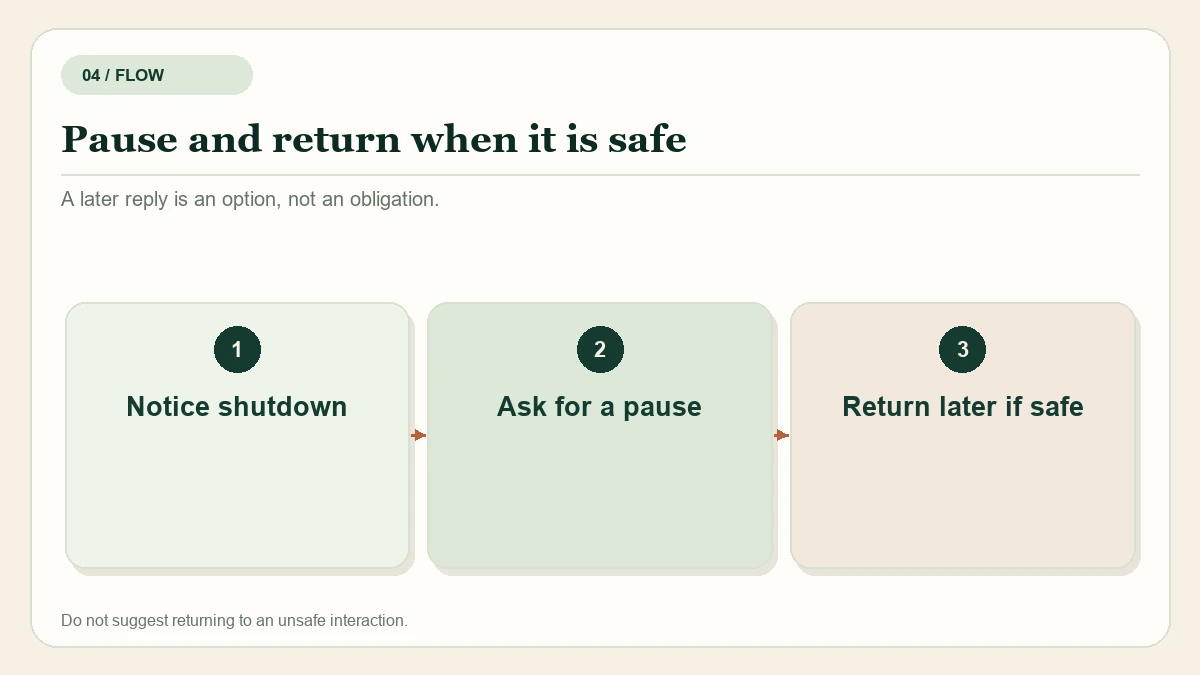
When the relationship allows it, agree that either person can pause a heated conversation and return at a specific time. A short statement can prevent silence being mistaken for consent: “I am not agreeing; I need a break and will talk at seven.” Later, state the issue clearly, explain what you need and listen to the response. The words should sound like yours; a rehearsed script is useful only if it fits the situation.
Some conversations work better by message or in a neutral setting. Others need a third person who can keep the discussion respectful. A boundary such as “I will continue when we can speak without shouting” can help with someone who is willing to change. PsyQuench’s guide to setting boundaries without guilt develops that skill further.
Do not measure success by whether the other person agrees with you immediately. A better measure is whether you can express your point and whether the discussion remains safe enough to continue. If the person uses your pause to intensify threats or control, stop treating the interaction as an ordinary communication exercise.
When Shouting Becomes a Relationship Safety Concern
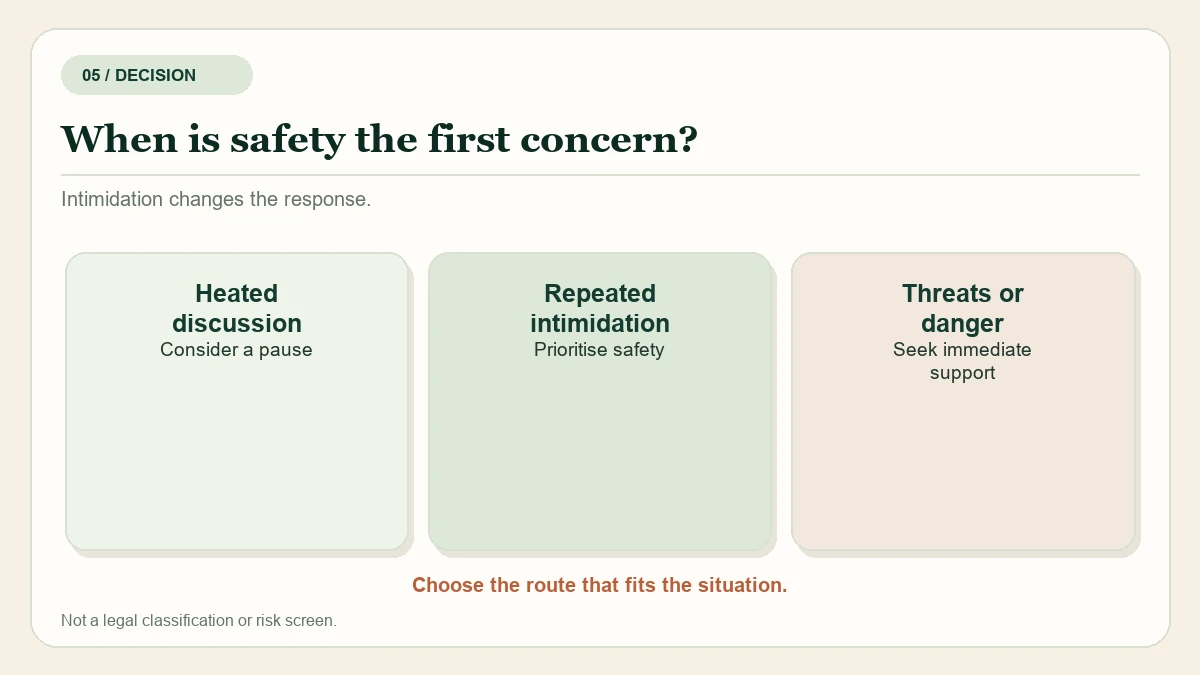
An occasional raised voice in an argument is different from a pattern of threats, intimidation, control or fear. If you are afraid of what the person will do when you disagree or leave, the immediate question is how to stay safe, not how to argue more effectively. The NHS guidance on domestic abuse discusses intimidation and controlling behaviour; its UK contact details are not a substitute for locally verified support in India.
Consider what help is available from a trusted person or qualified local service, and be careful about plans that the other person could monitor. In an immediate emergency, contact the appropriate local emergency service. Specific helplines or organisations should be checked for your location before relying on them. If you are uncertain whether the behaviour is a safety concern, you can still describe the concrete acts to a qualified professional rather than first deciding on a label.
No one should be told to confront an intimidating person as a test of courage. A pause script may be helpful in a respectful but heated relationship and unsafe in a coercive one. The distinction is part of the answer to why you go silent: sometimes silence is occurring in a situation where caution makes sense.
How Counselling May Help With Recurring Shutdown
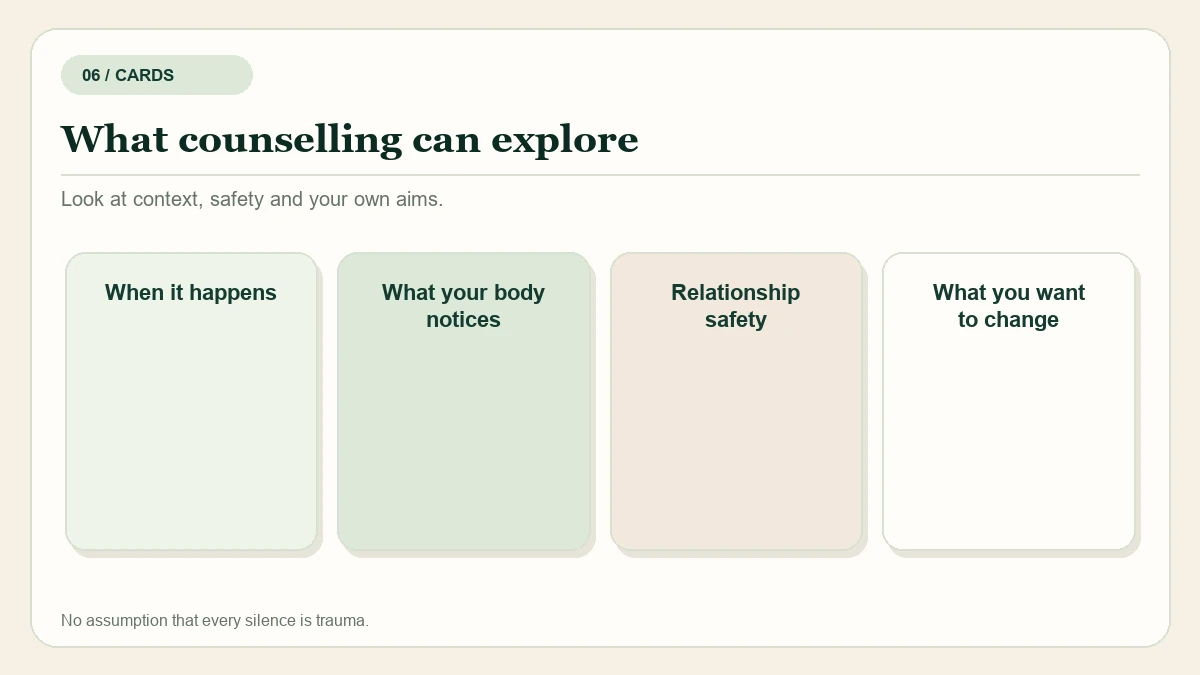
If you repeatedly lose your voice in conflict, avoid important conversations or feel distressed afterward, counselling can help you explore the pattern in context. A qualified professional can ask when it happens, how safe the relationships are, what you notice in your body and what you would like to change. The goal is not to declare that every reaction is trauma or to teach you to tolerate shouting indefinitely.
Support may involve practising communication in safer conditions, learning to notice rising stress and deciding which relationships need boundaries or outside help. If you also feel emotionally numb beyond arguments, PsyQuench’s article on emotional numbness and support covers that separate experience. Your own assessment should determine what is relevant.
You can seek help even if you do not know the “correct” name for your response. Describe what happens, with whom and what follows. That is enough to begin a useful conversation.
Frequently Asked Questions
Does going silent when shouted at mean I have trauma?
No. Many explanations are possible. A qualified professional can consider broader history and symptoms if you are concerned; one behaviour is not a diagnosis.
Is it okay to answer later?
Yes, when the relationship and situation make it safe and useful. A delayed, clear response often serves the issue better than forcing words during shouting.
What if I cry instead of becoming silent?
People react differently to conflict. Focus on what the situation means for your safety and ability to communicate rather than assigning yourself a label from the reaction alone.
What if shouting happens every week?
Look at the wider pattern: threats, control, fear and whether boundaries are respected. Seek appropriate local support if you feel unsafe; a conversation script may not be enough.
You Can Return to Your Point When It Is Safe
Losing words in a loud moment does not settle the argument or define your courage. Notice when it happens, consider the relationship context, and use a pause or later conversation where that is safe. If the pattern is distressing or the shouting is intimidating, seek support that takes both your response and the other person’s behaviour seriously.
Publication and visual brief
Article word count: 2286 | Source check: 15 November 2026 | Status: editorial review before publication
SEO and publishing details
SEO title: Why Do I Go Silent When Someone Shouts at Me?
Slug: why-do-i-freeze-when-someone-yells-at-me
Meta description: Understand why you may go silent when someone shouts, why words come later, and how to respond safely without assuming a trauma diagnosis.
Primary keyword: why do I freeze when someone yells at me
Category: Therapy and Mental Wellness
Intent: Explanation, coping and safety
Schema: Article; FAQPage only if eligible
Canonical: Self-referencing; distinct from emotional numbness and family conflict pages
Reviewer: Qualified counselling/clinical psychologist; safety-resource check for India, names only after verification
Incoming links: Boundaries without guilt; family conflicts; emotional numbness
Final editorial checks
Check 2,000-plus words, ten H2 order, three internal links, no trauma diagnosis, and India-specific safety resources if any are added.
Image production plan
Image 1
Featured after title. Purpose: show silence during shouting without depicting violence. Concept: two adults separated by a visual wall of sound; one gathers words while a small speech bubble fades. Respectful editorial illustration, navy/teal/sand. Text: “Why Do I Go Silent?” Prompt: Premium conceptual illustration of an adult becoming quiet during a loud disagreement, no threatening physical contact, strong readable headline area. Landscape 16:9. Filename: go-silent-when-shouted-at-featured.png. Alt: Person struggling to speak during a raised-voice conversation. Accuracy: no diagnosis implied.
Image 2
Under H2 02. Purpose: distinguish possible causes. Concept: four cards stress response, surprise, learned pattern, deliberate pause, equal weight. Prompt: Balanced four-option explanation diagram for silence in conflict, no clinical certainty or trauma label. Square 1:1. Filename: reasons-for-silence-in-conflict.png. Alt: Four possible reasons a person may go silent in conflict. Accuracy: not a diagnostic tool.
Image 3
Under H2 05. Purpose: explain later clarity. Concept: during/after timeline with fewer words during shouting and clearer note afterward. Prompt: Simple two-stage timeline of an argument and later reflection, no brain-region claims, calm colors. Landscape 3:2. Filename: words-after-argument-timeline.png. Alt: Timeline showing that words may become clearer after an argument. Accuracy: illustrative.
Image 4
Under H2 07. Purpose: notice early cues. Concept: body silhouette and attention icon with blank areas for personal signs, no fixed checklist. Prompt: Printable self-observation card for early stress cues in conversation, neutral silhouette, no medical claims. Portrait 4:5. Filename: early-signs-of-shutdown.png. Alt: Blank card for noticing early signs of conversational shutdown. Accuracy: self-reflection only.
Image 5
Under H2 08. Purpose: support safe response. Concept: two routes pause now/return later, with optional script in small type. Prompt: Minimal conversation choice flow showing a safe pause and later return where appropriate, readable labels, no instruction to confront unsafe person. Landscape 16:9. Filename: pause-and-return-conversation.png. Alt: Flowchart for pausing and returning to a conversation. Accuracy: only for safe situations.
Image 6
Under H2 09. Purpose: distinguish communication from safety. Concept: fork ordinary heated discussion versus intimidation/threats, safety route highlighted. Prompt: Respectful safety decision card distinguishing heated discussion from repeated intimidation, no graphic violence or helpline numbers. Square 1:1. Filename: shouting-safety-distinction.png. Alt: Diagram separating a heated discussion from a safety concern. Accuracy: not legal or clinical classification.
Nervous System Regulation & Trauma Support
Freezing or losing your voice during conflict is a protective nervous system response. Therapy can help you feel grounded, safe, and heard. You can Explore Therapy Services or get started directly below: