Why Are Homemakers So Tired Even After Staying at Home All Day?

“Why are housewives always tired?” is often asked as if being at home means being at rest. It does not. A homemaker’s day can contain physical work, childcare or eldercare, planning, interruptions and responsibility that continues after any particular chore is finished. At PsyQuench, we think the useful question is not whether someone has “earned” their tiredness, but what demands are placed on them and whether they get enough support and recovery. Persistent fatigue can also have medical causes, so no article should explain it away as stress. First, it helps to look at what a day at home actually contains.
A Homemaker’s Day: The Work Nobody Notices
Picture a weekday in a household with two adults and a school-going child. Breakfast has to be prepared, lunch packed, uniforms found, dishes cleared, a parent’s prescription collected, groceries planned and a school message answered. The person managing these tasks may also be the one who notices that the medicine is running low and that the child needs supplies for a project next week. The visible tasks have beginnings and ends; the responsibility to notice the next task often does not.

This is an illustration, not a description of every Indian home. Some households divide work fairly, employ help, or have different care arrangements. Yet even a household with paid help still needs decisions, scheduling and follow-up. “Someone cleans” does not answer who arranged it, made sure supplies were available or stepped in when the cleaner was absent.
When people compare paid employment with work at home, they can end up arguing about which is harder. That comparison rarely helps. Both kinds of work can be demanding. The point is that unpaid domestic work is real work. It takes time and effort even when no payslip records it. The review of household mental labour gives researchers a language for the less visible part of this work, which is where many conversations at home become stuck.
Why Household Responsibilities Often Go Unrecognized
Domestic work is most noticeable when it is not done. Clean clothes in the cupboard, a stocked kitchen and a family appointment reached on time can look like the normal background of life. The effort that produced them disappears into the result. If the person doing the work is available throughout the day, others may assume the tasks fit easily between long stretches of free time.
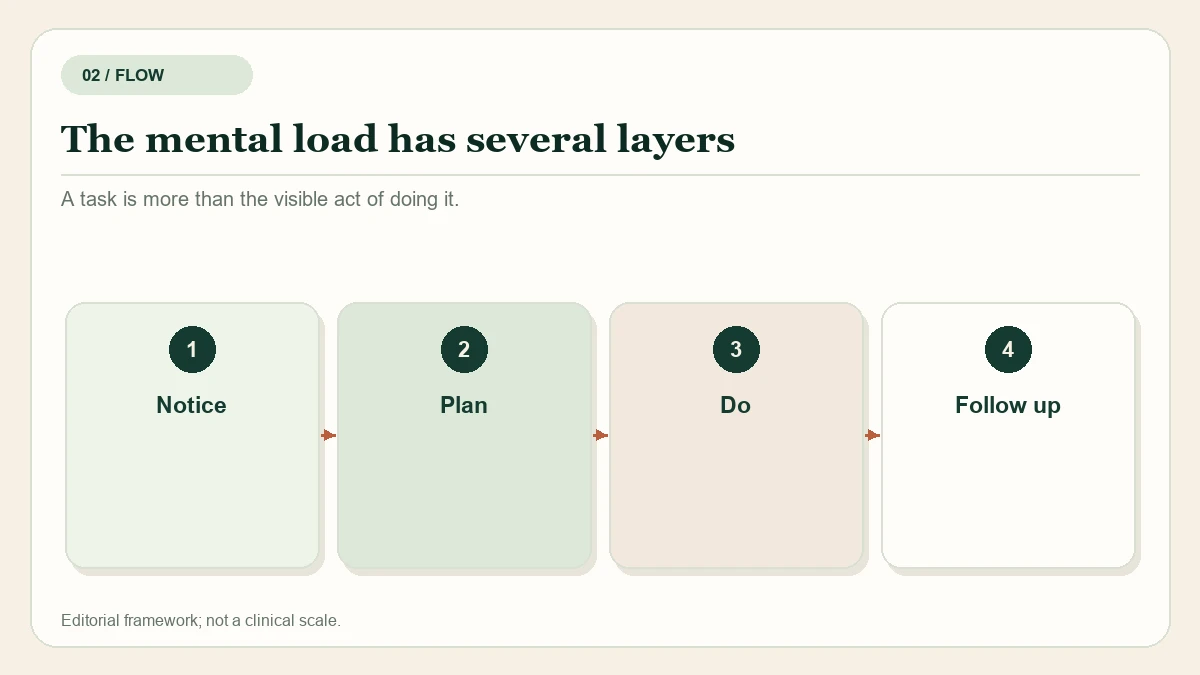
“Just ask me for help” can sound generous, but it often leaves the full management job with one person. They still have to notice the task, decide when it matters, explain what needs doing and check whether it was finished. A family member who occasionally cooks dinner has helped with a task. A family member who takes responsibility for dinners on three days—planning, shopping, cooking and clearing up—has taken ownership of part of the load. That difference is worth discussing without turning the conversation into a scorecard.
Recognition does not require constant praise for every chore. It requires a shared understanding of what the household needs and who carries the responsibility. If only one person can answer where everything is kept, when every appointment is due and what everyone will eat tomorrow, the household may be relying on them more than it realises.
The Mental Load of Managing an Entire Household
Mental load is the thinking and monitoring that keeps a household running: anticipating needs, remembering dates, weighing choices, coordinating people and checking that plans worked. The work may occur while doing something else. A person folding laundry may also be mentally arranging transport for a parent, thinking through next week’s meals and remembering to pay a fee.

The distinction matters because handing over one chore may not hand over the mental load connected to it. If someone else washes the dishes but waits to be told when, the original manager still watches the sink. If that person takes full responsibility for the kitchen cleanup each evening, another mind can finally set the task down. The systematic review of household mental labour describes how these often invisible responsibilities have been studied in relation to wellbeing. Its findings should not be treated as a precise measurement of every homemaker’s experience, but they do confirm that the work is more than a metaphor.
Mental load also includes decisions that are emotionally charged. Arranging care for an older relative, noticing that a child is anxious, or mediating tension between family members can take attention long after a practical task ends. This does not mean all emotional care is a burden. It means caring becomes exhausting when one person is expected to remain available, remember everything and absorb every problem without a chance to hand over responsibility.
How Constant Responsibility Turns Into Exhaustion
Exhaustion is not determined only by how much energy one task uses. It also depends on how many demands arrive, how predictable they are and what chance a person has to recover between them. Preparing a meal may be manageable. Preparing it while supervising homework, answering a family call and worrying about an appointment can feel very different. The day is not necessarily one long difficult event; it may be a sequence of small tasks with almost no uninterrupted pause.
The body and mind do not keep separate accounts for “proper work” and “just household things.” Physical activity, planning, emotional attention and poor sleep can all contribute to how tired someone feels. The review of unpaid labour and mental health reports an association in studies of employed adults; it is useful background, but it cannot be used to claim a specific risk for full-time homemakers in India. That limitation matters. A reader’s fatigue needs to be understood in their own circumstances.

This is also why a holiday from one task may not feel like a holiday if the person remains responsible for everything else. A day without cooking can still include scheduling, caregiving and vigilance. To understand the tiredness, ask not just “What did you do today?” but “What did you have to keep track of, and when were you truly off duty?”
Why Doesn’t Rest Always Make the Tiredness Go Away?
Rest is not simply the absence of paid work. A short break that can be interrupted at any moment may provide less recovery than a predictable stretch when another person is genuinely in charge. Sleep may be fragmented by a child, an older relative or worry about the next day. Someone may sit down in the afternoon but remain the default person for every question. They are seated, yet still on call.
Even with good support, fatigue can have other explanations. The NHS guidance on tiredness and fatigue describes a range of possible contributors, including sleep, health conditions and medicines, and advises seeking medical help when tiredness persists or affects daily life. The article you are reading cannot tell you whether your fatigue comes from workload, a health problem or several causes together.
If tiredness is new, persistent, worsening or affecting ordinary activities, speak with a qualified healthcare professional. You might note how long it has been present, how you sleep, any other symptoms and any changes in medicines or routine. That information can make a consultation more useful. Do not postpone assessment because someone has told you that “everyone is tired.”
The Emotional Cost of Feeling Unappreciated
There is a difference between being tired after work and feeling that the work does not count. A remark such as “What did you do all day?” can make a person defend an entire day instead of talking about what support is needed. Repeated dismissal may bring anger, sadness or a sense of being alone with the household’s needs. It can also make asking for help feel like admitting failure.
Not every disagreement about chores signals a harmful relationship. People may genuinely be unaware of what the other person does, especially when schedules barely overlap. The first useful step is often to make the work visible rather than to debate whether anyone is “lazy.” But if requests for help are repeatedly mocked or ignored, the emotional strain deserves attention in its own right.
For readers who are caring for children, the overlap between domestic work and emotional care can be especially hard to untangle. PsyQuench’s discussion of parenting stress in Indian households explores that part in more detail. Here the important point is simpler: feeling unseen can add a second burden to the workload, and recognition without practical change may not be enough.
When Exhaustion Begins Affecting Everyday Life
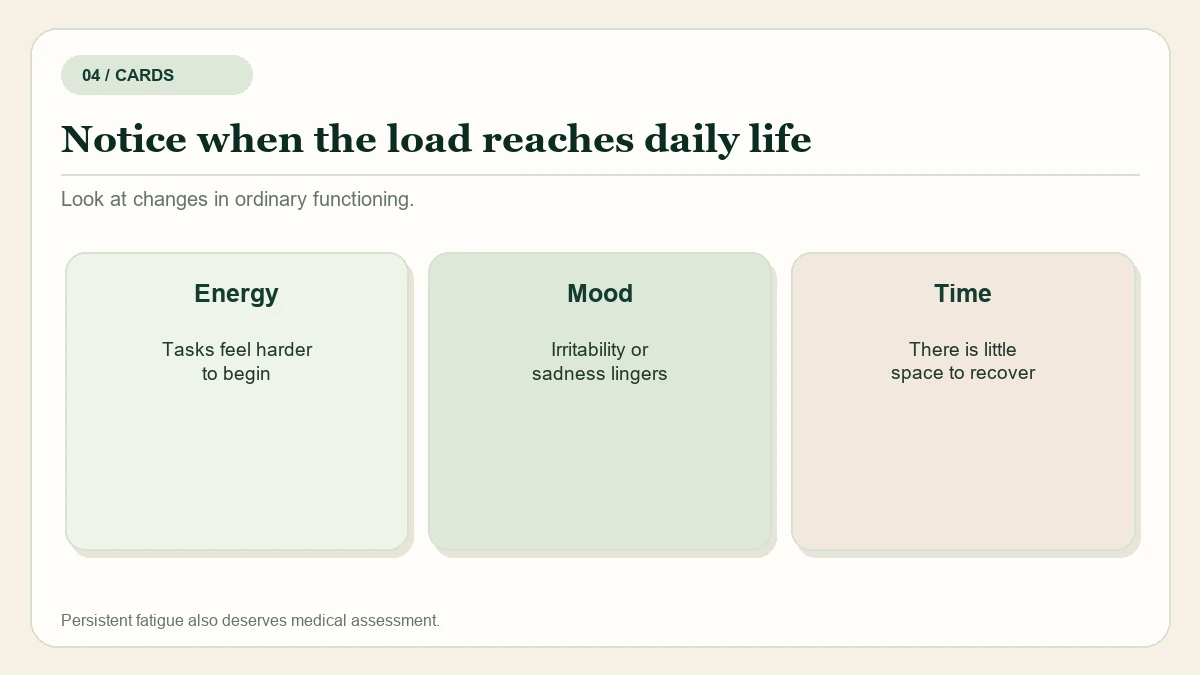
Tiredness becomes more concerning when it narrows what a person can do or enjoy. You may notice that small decisions feel difficult, that you are irritable more often, or that you have little attention left for conversations or interests that used to matter. These experiences are not a diagnosis. They are information that the current arrangement may be unsustainable—or that a health issue needs assessment.
It helps to look for a pattern rather than judging yourself by one difficult day. Has the fatigue lasted weeks? Is it improving after genuine rest? Are you avoiding ordinary activities because you have no energy? Are there symptoms such as low mood, disrupted sleep or physical changes? A clinician can help assess the whole picture; a family conversation can address the distribution of work. Both can be appropriate at the same time.
If the tiredness is accompanied by persistent emotional distress, do not feel you must settle the label “burnout” or “depression” before asking for support. PsyQuench’s guide to burnout and depression can help you understand why the distinction matters, while a qualified professional can consider your individual situation.
Small Changes That Can Make the Daily Load More Manageable
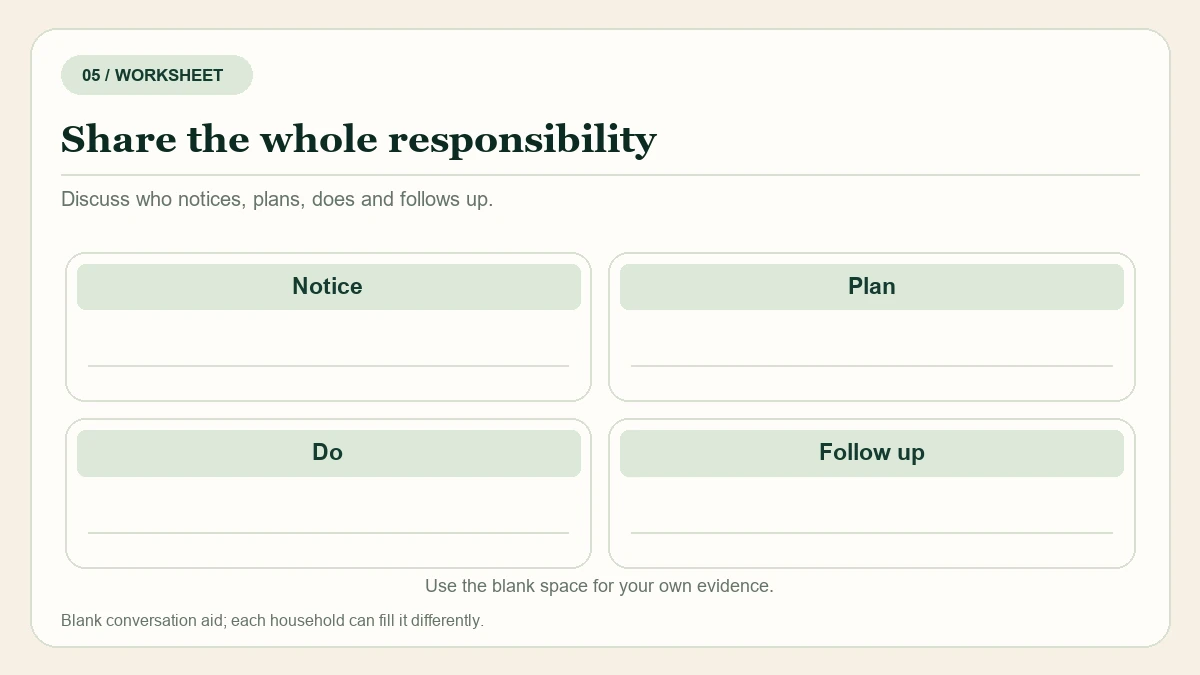
Before asking a household to “help more,” write down what actually happens for a week. List a few recurring responsibilities—meals, school communication, medicines, bills or cleaning. For each, note who notices that it is needed, who plans it, who does it and who checks that it was completed. This is a conversation aid, not a scientific measure. It can reveal why a person still feels responsible even when other people complete some chores.
Choose one responsibility to change rather than trying to redesign the whole home overnight. For example, a family member might take full ownership of weekday breakfast: checking ingredients, shopping when needed, preparing food and cleaning up. The homemaker should not have to remain the reminder system for that transfer to count. A short weekly check-in can help both people see whether the arrangement is actually working.
Protecting recovery time also needs specificity. “Take a break whenever you want” may be impractical if someone is still the emergency contact for every ordinary question. A more useful agreement is a time when another capable adult is the default person for routine needs. Financial, health and caregiving constraints may limit what is possible, so the goal is a workable change, not a flawless schedule.
Sharing Responsibility: What Families Can Do Differently
Families can begin by asking, “Which responsibilities have one owner by default?” That question is more precise than “Who worked harder today?” Ownership includes noticing, planning, performing and following through. It can be shared across adults and, in age-appropriate ways, children. The arrangement should reflect capacity: someone with a long paid-work shift may still be able to own a defined household task; someone recovering from illness may need less, not more.
The household also needs a way to adjust when life changes. School exams, a relative’s illness or a busier work season can increase the load unexpectedly. A division that was fair six months ago may now leave one person constantly stretched. Revisit it without treating the first agreement as a permanent contract.
Sometimes a conversation about chores is really a conversation about respect. If one person’s time is assumed to be infinitely flexible, even an efficient task chart will not solve the underlying problem. In that case, a more direct discussion about expectations may be necessary. PsyQuench’s article on stress, burnout and counselling support explains how professional support can help when strain has become persistent, while changes at home remain essential.
When Should a Homemaker Seek Professional Support?
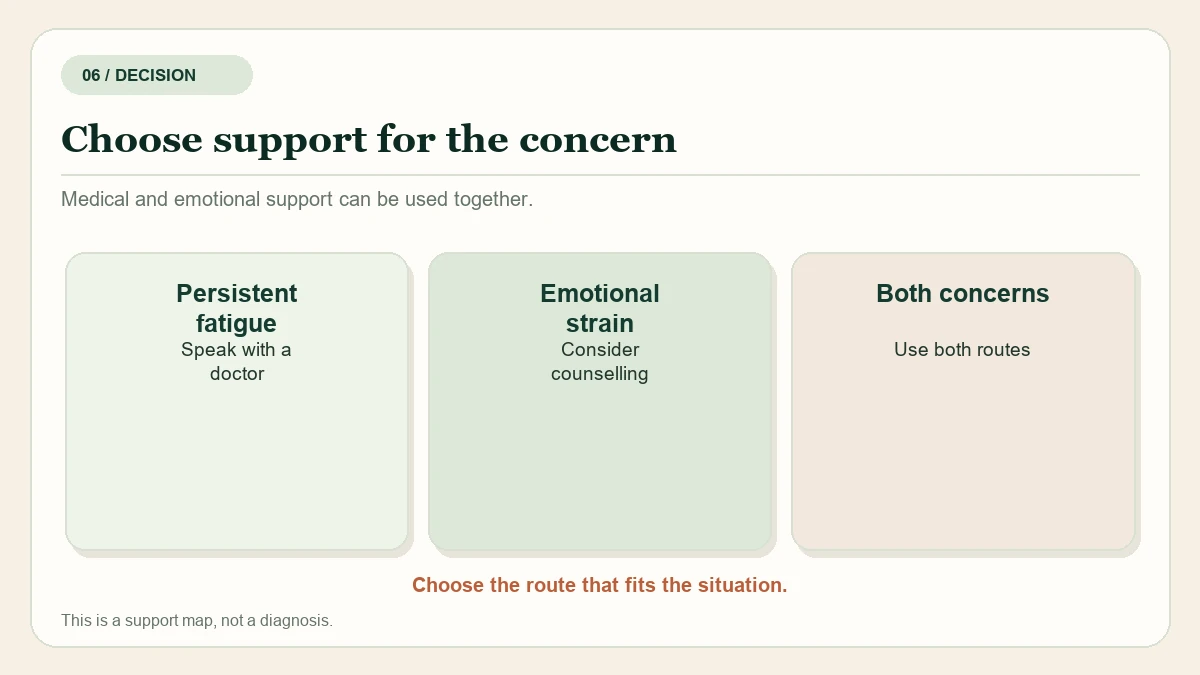
Start with the kind of problem you are facing. Persistent physical fatigue, especially with other symptoms or reduced daily functioning, warrants medical assessment. Emotional exhaustion, ongoing sadness, anxiety or conflict around responsibility may be worth discussing with a qualified mental-health professional. Those routes can run together. A counsellor cannot diagnose a medical cause of fatigue from this article, and a medical test alone may not change an unfair workload.
If you are unsure, a healthcare professional can help you work through the possible contributors. Bring a short account of your sleep, symptoms, medicines and responsibilities rather than feeling pressured to prove that you have worked “enough.” If the central problem is the distribution of care, consider whether family members can join a practical conversation or seek support to communicate more effectively.
Your tiredness does not need to reach a crisis before it counts. It is worth asking for help when you notice that the current arrangement is taking more than you can comfortably give.
Frequently Asked Questions
Can mental work really make someone tired?
Yes. Planning, anticipating and monitoring household needs require attention even when the work is not physically heavy. How much it contributes to any one person’s fatigue varies, and persistent tiredness should not automatically be attributed to mental load.
Is a tired homemaker always burned out?
No. Tiredness has many possible contributors, including sleep and medical conditions. “Burnout” is not a substitute for a personal assessment.
What if my family says they already help?
Ask who owns the whole task, including noticing and follow-up. People may sincerely help with visible chores while one person still manages the household calendar and decisions.
Should I see a doctor or a counsellor first?
If fatigue is persistent, unexplained or affects your daily life, a medical consultation is important. Counselling may also help with emotional strain. You do not have to choose only one form of support.
Your Work and Your Health Both Deserve Attention
Being at home does not make domestic work effortless. A useful response to exhaustion is to make the work visible, share genuine responsibility and protect time when someone else is in charge. If the fatigue persists, have it assessed rather than assuming the household explanation is the only one. You deserve an answer that takes both the demands of your day and your health seriously.
Publication and visual brief
Article word count: 2422 | Source check: 15 November 2026 | Status: editorial review before publication
SEO and publishing details
SEO title: Why Are Homemakers So Tired? Mental Load and Invisible Work
Slug: why-are-homemakers-so-tired
Meta description: Explore the invisible work behind homemaker exhaustion, how families can share responsibility, and when persistent fatigue needs medical attention.
Primary keyword: why are housewives always tired
Category: Therapy and Mental Wellness
Intent: Informational explanation with practical support
Schema: Article; FAQPage only if current policy supports it
Canonical: Self-referencing; distinct from the burnout-versus-depression guide
Reviewer: Qualified psychologist for wellbeing claims and medical reviewer for fatigue claims; names only after verification
Incoming links: Parenting stress; stress and burnout; burnout or depression
Final editorial checks
Verify 2,000-plus article words, 10 H2 order, at least three internal blog links, primary-source caveats, and no claim that all fatigue is psychological.
Image production plan
Image 1
Featured illustration after title. Purpose: make invisible work visible without depicting a helpless homemaker. Concept: adult at home completing a task while translucent planning notes float around household objects. Warm cream, muted teal and deep blue, premium editorial style, headline area. Exact text: “The Invisible Exhaustion of Homemakers”. Prompt: Editorial illustration of an Indian homemaker managing ordinary household tasks and planning responsibilities, dignified realistic setting, clear negative space for readable headline, no stereotypes or statistics. Landscape 16:9. Filename: invisible-exhaustion-homemakers-featured.png. Alt: Homemaker managing visible chores and less visible planning. Accuracy: example scene only.

Image 2
Under H2 01. Purpose: show a day’s visible work. Concept: simple illustrated timeline of meals, care and errands with open gaps that are actually interruptions. Text: “Morning”, “Afternoon”, “Evening”. Prompt: Clean educational timeline of a varied homemaker day with chores and care tasks, no numeric claims, subtle colors. Landscape 3:2. Filename: homemaker-day-timeline.png. Alt: Timeline of household tasks across a day. Accuracy: illustrative, not a typical schedule claim.
Image 3
Under H2 03. Purpose: define mental load. Concept: one task shown as four layers: notice, plan, do, follow up. Minimal icons, no character photo. Text: those four labels. Prompt: Four-layer household task diagram showing noticing, planning, doing and following up, crisp editorial infographic. Square 1:1. Filename: household-mental-load-layers.png. Alt: Four components of responsibility for a household task. Accuracy: editorial framework, not validated scale.
Image 4
Under H2 05. Purpose: explain why a break may be interrupted. Concept: two rest blocks, one repeatedly cut by routine requests, one protected by another adult taking charge. No clock-based health claim. Prompt: Side-by-side conceptual illustration of interrupted versus protected rest in a household, respectful realistic style, no medical claims. Landscape 3:2. Filename: interrupted-vs-protected-rest.png. Alt: Comparison of interrupted and protected rest. Accuracy: illustrative only.
Image 5
Under H2 08. Purpose: support family conversation. Concept: printable responsibility matrix with columns notice, plan, do, follow up and blank rows. Text: column labels only. Prompt: Clear printable household responsibility worksheet, four columns, room to write, cream background and navy lines. Portrait 4:5. Filename: household-responsibility-map.png. Alt: Blank household responsibility map. Accuracy: not a diagnostic or validated tool.
Image 6
Under H2 10. Purpose: distinguish support routes. Concept: branching path “Persistent fatigue → medical assessment” and “Emotional strain → mental-health support,” with both paths allowed together. Prompt: Simple support-path flowchart with two nonexclusive routes, readable labels, calm editorial design. Square 1:1. Filename: fatigue-support-path.png. Alt: Diagram showing medical and emotional-support routes for fatigue. Accuracy: not personal medical advice.
Feeling Overwhelmed by the Invisible Load?
Emotional fatigue and chronic mental load are real, valid, and treatable. Speak with a licensed therapist at PsyQuench to regain balance and prioritize your wellbeing. You can Explore Counselling Services or get started directly below: