RCI-Approved Clinical Psychology Colleges for 2026–27: Verified Programmes, Seats and Admissions

If you are looking for RCI-approved clinical psychology colleges in 2026, start with the exact programme, not the university name. An institution can have a respected psychology department and still have no current approval for the professional course you want. The PsyQuench guide below shows how to read the Rehabilitation Council of India’s (RCI) list, compare a small set of verified M.Clin.Psy. options, and check admission directly with each institution. The RCI list records sanctioned intake, which is not a count of seats still open to applicants. The information here was checked against the RCI list linked on 15 November 2026; a later list or admission notice may change what you can apply for.
Why RCI Approval Matters for Clinical Psychology
“RCI-approved college” is convenient shorthand, but approval attaches to a particular programme at an institution for a particular period. Those details matter if your goal is the regulated clinical psychologist pathway. A university may offer several psychology degrees, while only one appears in the relevant RCI category. The name on a brochure, an older M.Phil listing, or a general MA Psychology programme cannot substitute for the current entry.
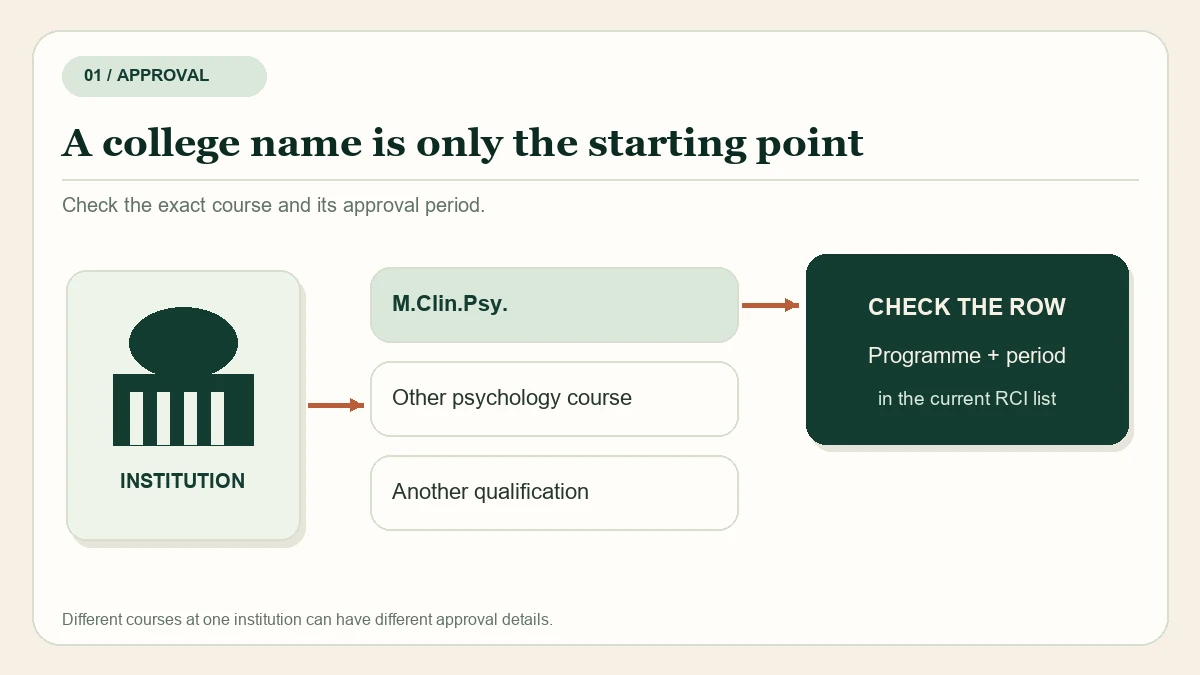
The RCI’s regular-mode programme page lists different clinical psychology qualifications. In 2026 the professional master’s is named M.Clin.Psy.; an RCI memorandum changed the earlier M.A. Clinical Psychology nomenclature. You may encounter both names in university pages that have not been updated at the same speed. That is a reason to check the regulator’s entry, not to assume that every similarly named course is the same.
This distinction is about the qualification attached to a professional role. It does not mean other psychology courses lack educational value. A course in counselling, research or applied psychology may fit a different goal. If you are still deciding between those directions, PsyQuench’s explanation of RCI and non-RCI psychology courses provides the broader comparison. For this college search, however, the question is narrower: is the exact M.Clin.Psy. programme approved for the session that concerns you?
How to Verify Approval From Official Sources
Open the RCI approved-institutions page and follow its current regular-mode list. Search within the document for the institution, then read the complete course row. Record four items: institution name and code, exact programme, approval period, and sanctioned intake. A screenshot of one line without its column headings can be misleading, especially when an institution has multiple courses or multiple approval periods.
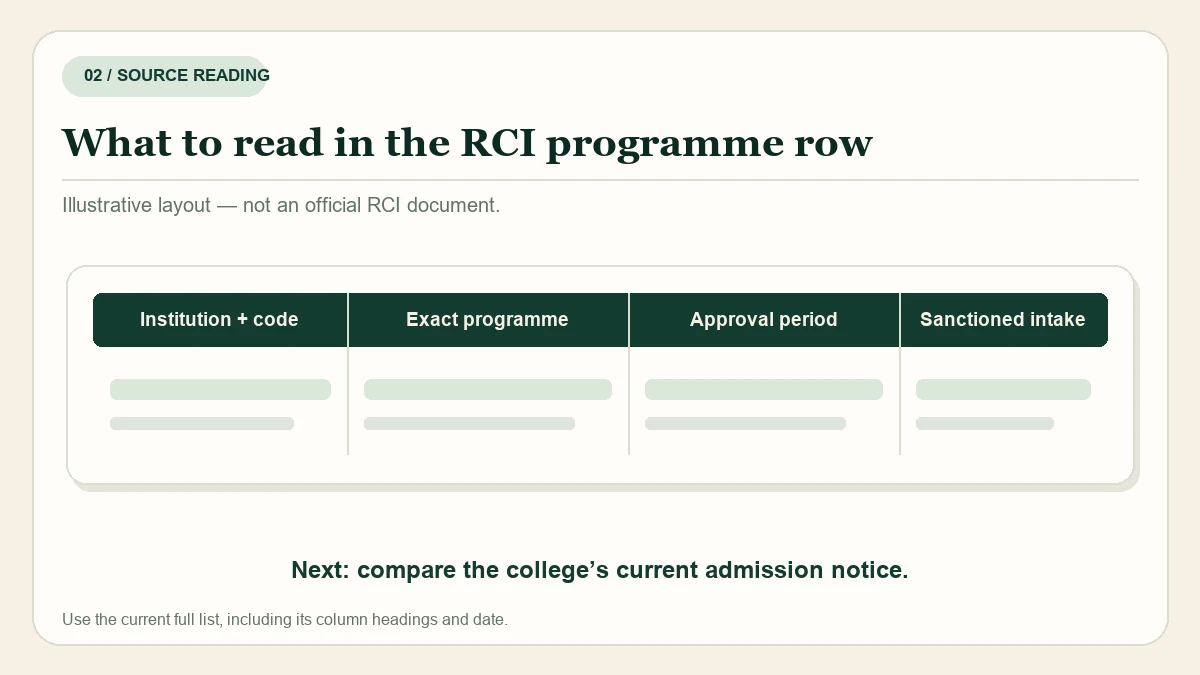
Next, compare that entry with the institution’s own admissions notice. The regulator’s list establishes approval information; the institution should tell you whether applications are open, who is eligible, which entrance process applies, and what documents and fees are required. RCI itself directs applicants to contact the institution for admission. If the two sources appear inconsistent, do not resolve the conflict by choosing whichever page is easier to read. Ask for a written clarification that names the programme and session.
Keep the verification date alongside your notes. A screenshot taken in August and a list issued in November can legitimately differ. This article uses the RCI list dated 12 November 2026. It is a useful starting point, not a guarantee that an admission window remains open on the day you read this page.
RCI-Approved Clinical Psychology Colleges for 2026–27
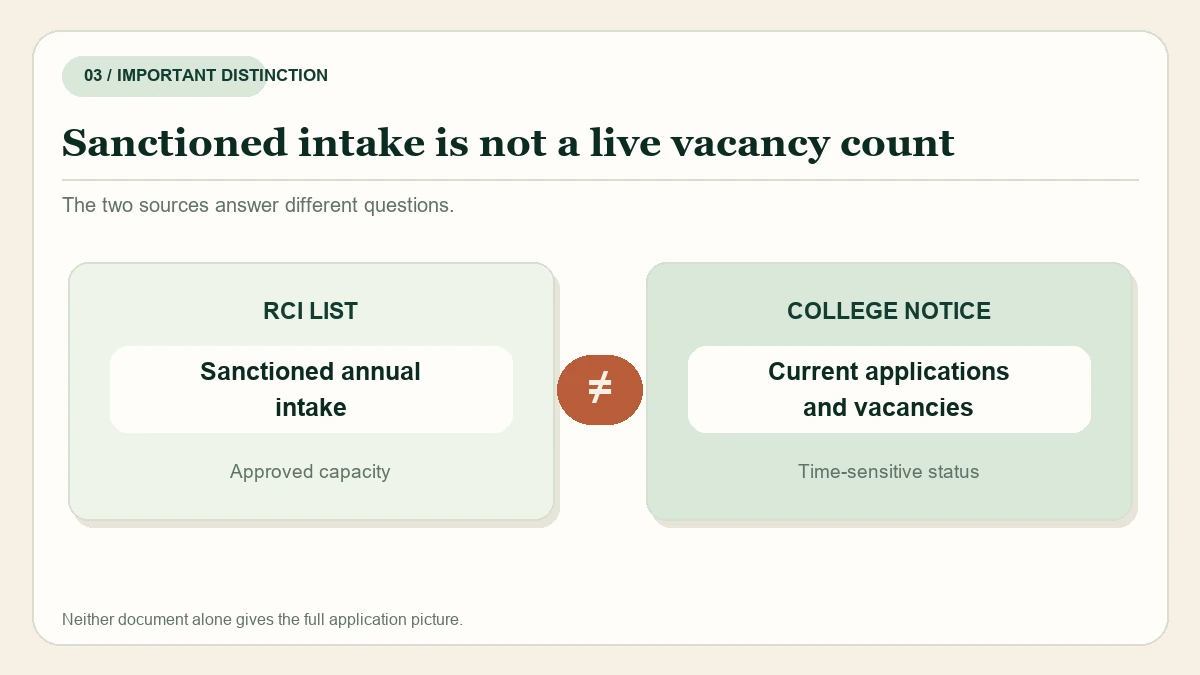
The following is a selected, verified sample, not a complete directory of every Indian programme. Each entry below appears as an M.Clin.Psy. row in the RCI list dated 12 November 2026. The final column is sanctioned annual intake, not vacancies.
| Institution and location | RCI code | Approval period shown | Sanctioned M.Clin.Psy. intake |
|---|---|---|---|
| Chhatrapati Shivaji Maharaj University, Panvel/Navi Mumbai, Maharashtra | MH113 | 2025–26 to 2027–28 | 10 |
| MGM University, Chhatrapati Sambhajinagar, Maharashtra | MH117 | 2026–27 to 2030–31 | 14 |
| Department of Clinical Psychology, Manipal University, Manipal, Karnataka | KK009 | 2026–27 to 2030–31 | 20 |
| Gurugram University, Gurugram, Haryana | HR077 | 2025–26 to 2027–28 | 10 |
| Amity AIBHAS, Greater Noida, Uttar Pradesh | UP260 | 2026–27 to 2030–31 | 12 |
| Santosh Medical College & Hospitals, Ghaziabad, Uttar Pradesh | UP261 | 2026–27 to 2030–31 | 16 |
The table deliberately gives a small, auditable comparison across Maharashtra, Karnataka and Delhi NCR. It is not a ranking, and a higher sanctioned intake does not establish better training or easier admission. Before using any row for an application, check the latest RCI PDF and the current institution notice. If the institution uses the older course name, ask it to identify the corresponding RCI-approved programme explicitly.
Understanding Approved Seats and Actual Vacancies
This is the most consequential distinction in a college list. “Sanctioned intake: 14” means the programme has approval for that annual intake in the stated period. It does not tell you whether 14 places are being advertised now, whether applications have closed, whether a waitlist is moving, or whether any places are unfilled. A search result that labels sanctioned intake “available seats” can make an ordinary approval table look like a live vacancy board.
Consider two applicants reading the same RCI row. One looks at it before the entrance notice is released; the other sees it after counselling and admission are finished. The sanctioned figure can be identical for both, while their actual options are completely different. This is why the second source in your check must be the institution’s current admission page or a written response from its admissions office.
Approval periods also need care. An entry spanning 2026–27 does not promise that every process, fee or location detail will stay unchanged through the period. It means you have found evidence for a specific approved course; it does not replace the programme’s current instructions. Keep these two facts in separate columns in your shortlist: “RCI approval verified” and “current application status verified.”
Options in Mumbai, Pune and Other Cities
Location matters because a full-time professional course affects housing, travel, living costs and support networks. It should not make you infer approval from a familiar campus name. In the RCI list checked here, Chhatrapati Shivaji Maharaj University at Panvel/Navi Mumbai has an M.Clin.Psy. row with intake 10, and MGM University in Chhatrapati Sambhajinagar has a row with intake 14. Both require a separate check of their current admissions notices.
Pune needs more careful handling. The inspected Savitribai Phule Pune University entry prints an intake of 10 for 2025–26 but also carries a “Regret for 2025–26” notation. It should not be presented as a confirmed 2026–27 M.Clin.Psy. option without a newer RCI clarification. Similarly, an older M.Phil row at a well-known Mumbai or Pune institution is not proof of current M.Clin.Psy. approval. A location-focused guide is useful only when these course-level differences remain visible.
Other regions broaden the comparison. The RCI sample includes Manipal in Karnataka, Gurugram in Haryana, and Greater Noida and Ghaziabad in Uttar Pradesh. If relocation is possible, compare the actual approved programme and learning setting before deciding that your nearest city is your only route. If relocation is not possible, that constraint belongs in the decision, too; a theoretically suitable programme is not a practical option for everyone.
There is one specific website discrepancy worth checking before publication or application. MGM’s admissions page presents “sanctioned seats 12” near one part of its clinical psychology block, while another part identifies 14 for M.Clin.Psy. and 12 for the diploma. The RCI list records 14 for M.Clin.Psy. If you shortlist MGM, ask the university to confirm which figure belongs to which course and the current admission notice. Do not silently merge the two programmes.
Checking Whether You Meet the Eligibility Rules
Finding an approved course is only half the check. The RCI M.Clin.Psy. guidelines describe the academic baseline, including a four-year BA/BSc Psychology route and conditions for a three-year graduate through a fourth-year bridge or the first year of a psychology master’s. The guidelines also specify marks thresholds and category-related provisions. Read the document itself and the current institution notice before deciding that your own degree qualifies.
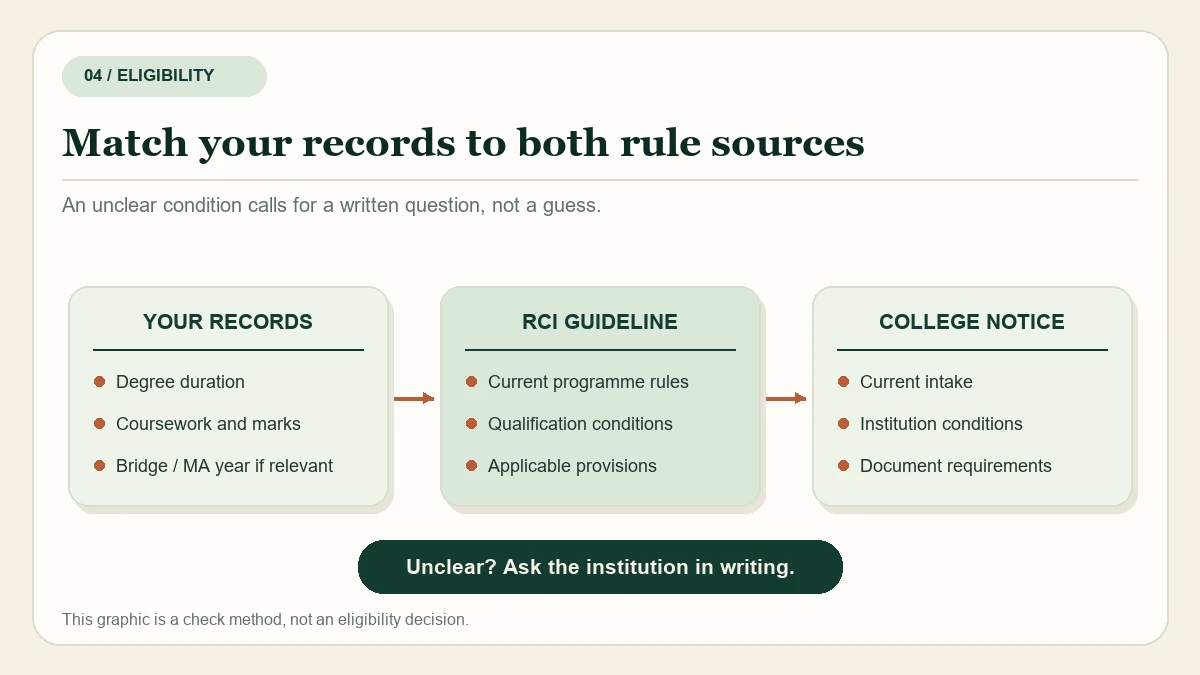
Do not use a phrase such as “BA Psychology accepted” in a search snippet as an eligibility decision. The length of your degree, psychology coursework, marks, bridge or master’s-year record, and the institution’s stated admission conditions may all matter. A final-year student may also need to check whether provisional applications are accepted and when results must be submitted. Those are institution-specific process questions.
The detailed BA-to-registration route belongs in a separate article. Here the practical test is simple: place your transcript and qualification details beside the RCI guideline and the institution’s notice. If a condition is unclear, send a precise query with your degree duration, subject and result status. A written reply is more useful than an assurance from a discussion forum.
How Admission and Selection Work
The RCI guidelines describe a written assessment and interview for the professional master’s. That does not mean every institution advertises admissions on the same date or uses identical application instructions. Once an approved course is on your shortlist, read its current notice from start to finish: application route, eligibility, documents, assessment dates, fee, selection process and contact point.
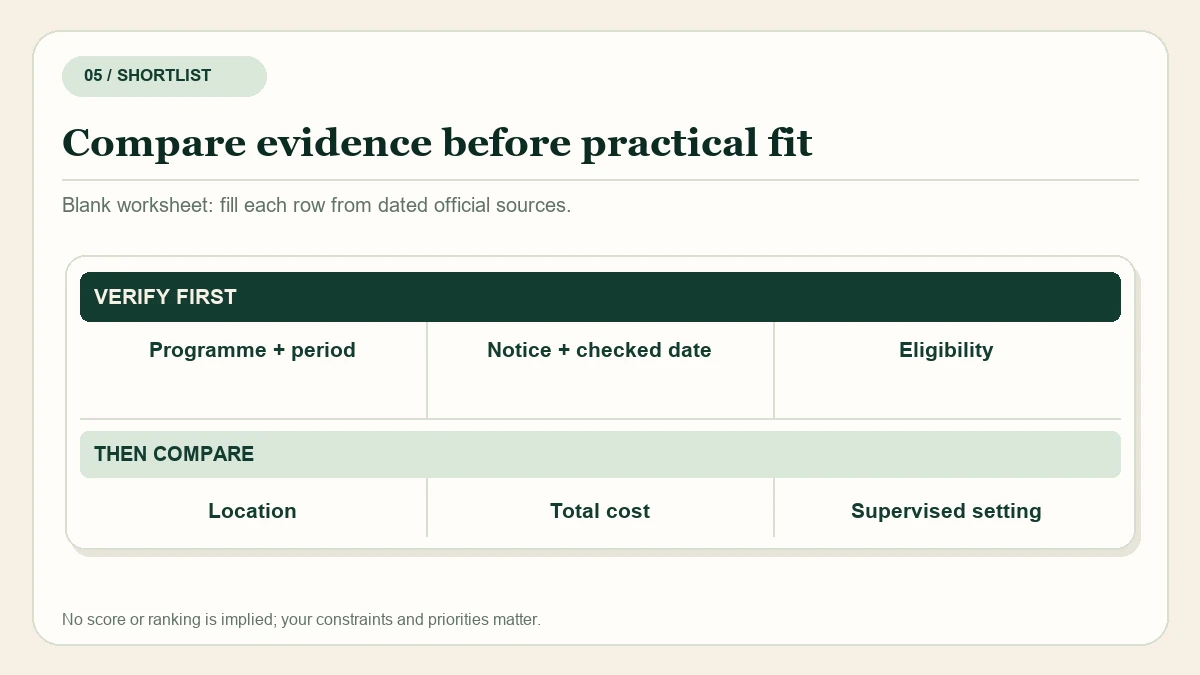
Make a simple admissions tracker with one row per institution. Put a link to the official notice in one column, the date you checked it in another, and unanswered questions in a third. If a notice is not yet posted, record “not confirmed” rather than copying last year’s date. If an institution names a different course or seat count from the RCI document, seek clarification before paying an application fee.
Application preparation can include revisiting core psychology concepts and understanding the programme’s clinical training requirements. But this article cannot tell you that a particular preparation course raises your chance of selection. Your immediate goal is to submit an accurate, timely application to a programme you have verified.
Building a Reliable College Shortlist
A good shortlist is more than the first three names in a search result. Begin with approval: exact M.Clin.Psy. row, applicable period and current RCI source. Then check whether the institution is taking applications for your desired intake and whether you meet its requirements. Only after those filters should you compare location, cost and learning environment.
For the learning setting, look for information about supervised clinical work, faculty, placement arrangements and how students receive feedback. Do not infer quality from a city or a large seat number. PsyQuench’s discussion of why hands-on training matters in clinical psychology explains why the supervised component deserves your attention. Ask the institution for information it has not publicly supplied.
Costs should be totalled realistically. Tuition is only one part; travel, accommodation, materials and time away from paid work may decide whether a programme is sustainable. If the institution publishes fees, note the year and any conditions. If not, mark the figure unverified. A shortlist is useful precisely because it lets you compare what is known, what is uncertain and what you need to ask next.
There is no universal “best” programme for all readers. One applicant may need to stay close to family; another may prioritise a particular supervised setting. The course-level regulatory check stays constant, while the practical priorities legitimately differ.
Preparing Documents and Admission Applications
Before an application window opens, gather degree and marks records, identity documents and any category certificates the institution requires. If you are relying on a bridge year or first-year master’s route, keep those records separate and easy to identify. Follow the institution’s checklist rather than assuming one generic list covers every admissions office.
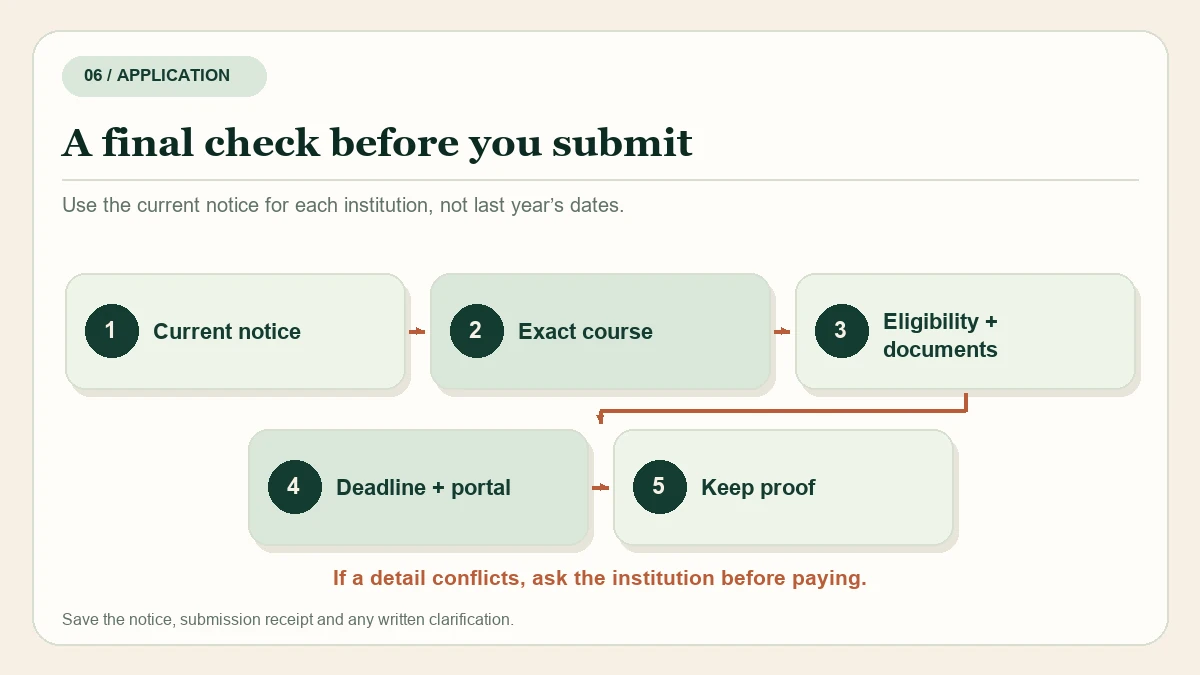
For each application, confirm the course title, deadline, submission portal, payment method and document format from the current notice. Keep proof of submission and correspondence. If you need a clarification, ask one focused question at a time: “Does my three-year BA plus the following psychology master’s-year record meet your published eligibility for the 2026–27 M.Clin.Psy. intake?” Include enough information for the office to answer, without sending unnecessary personal data to an unverified contact.
Dates change, and an old cached page can be more polished than the current notice. Reopen the official site shortly before submitting. The preparation that helps most here is not an elaborate spreadsheet; it is an accurate record of what each institution currently says and what you have actually completed.
Developing Useful Skills Alongside Formal Education
Clinical psychology requires more than choosing a college. The professional programme is designed around supervised learning. Reading research carefully, reflecting on ethical questions, writing clear notes and learning to accept feedback can make you a better student. Those activities are useful before and during training, but none of them substitutes for an approved qualification or registration.
If you are considering a short workshop or internship while waiting for an admission cycle, ask what it will teach, who supervises it and whether it fits your current level of responsibility. Be cautious of claims that a certificate alone makes you eligible for a regulated title. You can pursue useful learning without treating every paid course as an urgent requirement.
The immediate decision remains grounded in the same evidence: find the exact approved programme, confirm your eligibility and the current admissions process, then compare the practical fit. If your long-term goal has changed, take time to explore other psychology career paths rather than forcing a clinical route merely because it is familiar.
Frequently Asked Questions
Is the sanctioned intake the number of places still vacant?
No. It is the approved annual intake in the RCI list. The institution’s current admissions notice or office is the source for application and vacancy information.
Does an old M.Phil approval prove current M.Clin.Psy. approval?
No. Check the exact professional master’s row and applicable period in the current RCI document. Similar names and older approvals can refer to different qualifications.
Is there one national application deadline?
The RCI list is not a combined admissions calendar. Use the current notice for each institution; do not rely on a date carried over from a previous cycle.
What if the university and RCI show different seat figures?
Check that both figures refer to the same course and intake period, then request written clarification. MGM’s page illustrates why a diploma and a professional master’s should not be read as one programme.
Choose a Programme You Can Verify
The most reliable shortlist is the one you can explain line by line: exact M.Clin.Psy. programme, current approval period, sanctioned intake, institution-specific eligibility and live admissions status. Use the dated RCI list to identify possibilities, then make the institution’s current notice your next stop. The extra check may save you from applying to the wrong course—or assuming a seat is open when the list never said it was.
Publication and visual brief
Article word count: 2465 | Source check: 15 November 2026 | Status: editorial review before publication
SEO and publishing details
SEO title: RCI Approved Clinical Psychology Colleges 2026–27 | Verified M.Clin.Psy. Guide
Slug: rci-approved-clinical-psychology-colleges-2026-27
Meta description: Compare selected RCI-approved M.Clin.Psy. programmes for 2026–27, understand sanctioned intake, and check eligibility and admission accurately.
Primary keyword: RCI approved clinical psychology colleges 2026
Category: Psychology Courses and Careers
Intent: Informational comparison and admission decision
Schema: Article; FAQPage only if current search policy and implementation warrant it
Canonical: Self-referencing on publication; avoid duplicating another college directory
Reviewer: RCI regulatory or psychology admissions specialist; name only after verification
Update note: Recheck RCI list and institution notices immediately before publishing
Incoming links: RCI-vs-non-RCI guide; hands-on training guide; psychology career paths guide
Final editorial checks
Check exact H2 order against client plan, article word count, all links, current RCI source, MGM conflict and SPPU notation. No author credential until verified.
Image production plan
Image 1
Featured editorial illustration after title. Purpose: show programme-level verification. Concept: applicant comparing a campus card with an RCI document, a course row highlighted. Clean editorial flat illustration, cream/navy/teal, ample headline space. Exact text: “RCI-Approved M.Clin.Psy. Colleges 2026–27”. Prompt: Premium editorial illustration of an Indian psychology applicant comparing a campus prospectus with an official programme table, accurate generic documents, clear headline area, no logos or invented seals. Landscape 16:9. Filename: rci-mclinpsy-colleges-2026-featured.png. Alt: Applicant checking a clinical psychology programme against an approval list. Accuracy: no fictional RCI logo or guarantee of admission.

Image 2
Under H2 02. Purpose: teach list reading. Concept: annotated generic row with institution, code, course, approval period and intake. White background, navy labels, teal arrows. Text: only those five field names. Prompt: Clear educational diagram of a generic official programme row with five labeled fields and no real institution values. Landscape 3:2. Filename: how-to-read-rci-list.png. Alt: Diagram identifying the five fields to check in an RCI programme listing. Accuracy: generic illustration, not a reproduction of the PDF.
Image 3
Under H2 03. Purpose: show geography. Concept: simple India silhouette with markers for Maharashtra, Karnataka, Haryana and Uttar Pradesh, linked to a compact list. No invented college counts. Prompt: Minimal geographic infographic marking verified example regions for M.Clin.Psy. programmes, India map silhouette, no numerical claims. Portrait 4:5. Filename: mclinpsy-verified-regions.png. Alt: Map showing the states represented in the verified programme sample. Accuracy: markers only in cited states.
Image 4
Under H2 04. Purpose: distinguish intake from vacancies. Concept: two adjacent cards, “Sanctioned intake” and “Current openings”, the second with an institution-notice icon. Prompt: Precise two-card visual separating approved annual intake from current vacancies, no fake seat numbers. Square 1:1. Filename: sanctioned-intake-vs-vacancies.png. Alt: Comparison of sanctioned intake and current vacant places. Accuracy: no implication that one predicts the other.
Image 5
Under H2 08. Purpose: help shortlist. Concept: worksheet columns approval, eligibility, admissions, location, cost, supervision, with blank check cells. Prompt: Printable clean college comparison worksheet with six clearly legible column labels and blank rows, restrained editorial style. Landscape 16:9. Filename: clinical-psychology-college-shortlist.png. Alt: Blank comparison worksheet for approved programmes. Accuracy: no unverified rankings.
Image 6
Under H2 09. Purpose: guide action. Concept: five-step checklist from RCI document to institution notice to eligibility to documents to submission, with simple icons. Prompt: Minimal five-step admission verification flowchart, legible labels, no institution branding. Portrait 4:5. Filename: mclinpsy-application-checklist.png. Alt: Flowchart of five checks before applying to an M.Clin.Psy. programme. Accuracy: no universal dates.
Strengthen Your Clinical Profile with PsyQuench
Preparing for RCI-approved clinical psychology entrance exams or aiming to build competitive research credentials? Bridge the gap with verified practical training. You can View All Psychology Courses or get started directly below: