
Stress Disorders and Burnout: How Counselling Supports Recovery

Stress Disorders and Burnout: How Counselling Supports Recovery Stress is a normal part of life, but when it becomes chronic and overwhelming, it can lead to serious emotional and physical consequences. Many individuals today experience prolonged work pressure, academic demands, caregiving responsibilities, and personal challenges that accumulate over time. When stress is not managed effectively, it may develop into stress-related disorders or burnout. This is where stress counselling services become essential. They provide structured psychological support that helps individuals understand stress patterns, regulate emotions, and rebuild balance. Burnout and stress disorders are increasingly common in modern life. Students feel pressure to perform, professionals face constant deadlines, and caregivers often juggle multiple responsibilities. While short-term stress can motivate action, chronic stress can lead to exhaustion, irritability, and reduced functioning. Understanding how stress counselling services support recovery can help individuals seek timely help and prevent long-term emotional strain. To understand how stress affects the mind and body, you can watch this educational video: How stress affects your body – Sharon Horesh Bergquist This guide explores stress disorders, burnout, and how counselling helps individuals recover and regain emotional balance. Understanding Stress and Stress Disorders Stress is the body’s response to demands or challenges. It can be triggered by work pressure, academic deadlines, financial concerns, or relationship issues. Short-term stress can be helpful, but chronic stress may lead to physical and emotional exhaustion. Prolonged stress can affect mental health, physical health, and overall well-being. Stress disorders occur when stress responses become persistent and difficult to manage. Symptoms of stress disorders may include irritability, fatigue, difficulty concentrating, sleep disturbances, and physical tension. Individuals may also feel overwhelmed or emotionally drained. Stress counselling services help individuals identify these patterns and develop healthier ways to cope. Also Read: Stress – Wikipedia What Is Burnout? Burnout is a state of emotional, mental, and physical exhaustion caused by prolonged stress. It is often linked to work or caregiving roles but can occur in any context involving sustained pressure. Burnout involves feeling depleted, detached, and less effective. Common signs of burnout include chronic fatigue, reduced motivation, irritability, and a sense of hopelessness. Individuals may feel disconnected from their work or responsibilities. Over time, burnout can affect relationships and overall well-being. Stress counselling services address burnout by helping individuals identify stressors, set boundaries, and rebuild energy. Counselling also helps individuals reconnect with meaningful activities and restore motivation. Causes of Stress Disorders and Burnout Stress disorders and burnout develop due to a combination of factors. Workplace pressure, long hours, and lack of support can contribute to burnout. Academic stress, caregiving responsibilities, and financial concerns can also lead to chronic stress. Personality traits such as perfectionism or high responsibility can increase vulnerability. Environmental factors such as major life transitions, trauma, or ongoing uncertainty may also contribute. Stress counselling services help individuals explore these causes and understand how their environment and thought patterns influence stress levels. This understanding is the first step toward recovery. How Stress and Burnout Affect Mental Health Chronic stress and burnout can impact mental health significantly. Individuals may experience anxiety, low mood, or irritability. Sleep disturbances and fatigue can reduce concentration and productivity. Over time, prolonged stress may increase the risk of depression. Stress can also affect physical health. Headaches, muscle tension, and digestive issues are common. The immune system may weaken, making individuals more susceptible to illness. Seeking stress counselling services early can help prevent these effects from worsening. Counselling provides tools for managing stress and restoring balance. How Counselling Supports Recovery Counselling plays a central role in managing stress disorders and burnout. It provides a safe space to explore stressors, emotions, and coping patterns. Through therapy, individuals learn to identify triggers and develop healthier responses. Cognitive behavioral techniques are often used in stress management. They help individuals challenge unhelpful thought patterns and develop practical coping strategies. Relaxation techniques, mindfulness, and time management skills may also be introduced. Stress counselling services focus on both immediate relief and long-term resilience. Over time, individuals learn to set boundaries, manage expectations, and prioritize self-care. Online Stress Counselling Online counselling has become a convenient option for individuals experiencing stress and burnout. Many people find it easier to attend sessions from home. Online therapy allows for consistent support without travel or scheduling challenges. Platforms like Dhairyada offer structured online sessions tailored to stress management and burnout recovery. Sessions focus on identifying stress triggers, building coping strategies, and improving emotional regulation. Online stress counselling services are particularly helpful for working professionals and students with busy schedules. Regular sessions and practical exercises can lead to gradual improvement. Lifestyle Changes That Support Recovery While counselling is central to recovery, lifestyle adjustments also play an important role. Regular sleep, balanced nutrition, and physical activity help regulate the nervous system. Mindfulness and relaxation practices reduce tension. However, lifestyle changes alone may not address deeper emotional patterns. Combining these strategies with stress counselling services often leads to more sustainable results. Preventing Future Burnout Recovery from burnout involves more than rest. It requires changes in how individuals manage stress and expectations. Counselling helps individuals recognize early warning signs and develop preventive strategies. Learning to set boundaries, delegate tasks, and prioritize self-care can reduce the risk of future burnout. Regular reflection and support can help maintain balance over time. Summary Stress disorders and burnout are common in modern life, but they are manageable with the right support. Chronic stress can affect mental and physical health, leading to exhaustion and reduced functioning. Understanding the causes and symptoms of stress is the first step toward recovery. Stress counselling services provide structured support that helps individuals manage stress, rebuild energy, and improve emotional well-being. With consistent counselling and self-care, many people experience significant improvement. Conclusion Stress and burnout can feel overwhelming, but recovery is possible. Recognizing the signs and seeking support early can make a meaningful difference. Counselling offers practical tools, emotional support, and guidance for managing stress and restoring balance. If you are experiencing chronic stress or burnout, consider seeking professional help. With
Counselling Psychology Courses Online: Skills That Matter

Counselling Psychology Courses Online: Skills That Matter The growing awareness of mental health has led to a significant increase in demand for trained counsellors and mental health professionals. Students and working professionals are increasingly exploring counselling psychology courses to build meaningful careers that involve supporting emotional well-being and personal growth. With digital education expanding rapidly, many learners now prefer counselling psychology courses online because they offer flexibility and accessibility while still providing foundational knowledge and practical exposure. However, counselling is not just about learning theory. It requires real-world therapeutic skills such as empathy, active listening, ethical awareness, and intervention planning. Many students complete academic programs but still feel unsure about applying what they have learned in real sessions. This is why choosing the right counselling psychology courses is essential. Courses that focus on practical skill development, supervision, and case-based learning help learners prepare for real-life counselling work. To understand how counselling psychology supports mental health, you can watch this introductory video: Why Counselling Psychology? This guide explores the best counselling psychology courses online, the skills that matter for real-world practice, and how learners can prepare for counselling careers through structured training. What Are Counselling Psychology Courses? Counselling psychology courses focus on understanding human behavior, emotional experiences, and therapeutic techniques used in counselling settings. These courses teach how to support individuals dealing with stress, anxiety, relationship challenges, life transitions, and emotional distress. Unlike purely academic psychology courses, counselling-focused programs emphasize communication skills, empathy, and ethical practice. Counselling psychology involves helping individuals improve well-being, resolve crises, and enhance functioning through therapeutic relationships. Courses in this field often include theoretical frameworks, practical exercises, and supervised practice. With the rise of digital education, many institutions now offer counselling psychology courses online, allowing learners to access training from anywhere. These programs vary in depth and structure, so choosing the right one requires understanding your career goals and the skills you need to develop. Why Counselling Psychology Courses Online Are Popular The popularity of counselling psychology courses online has grown because they make mental health education more accessible. Students from smaller cities, working professionals, and individuals exploring career changes can now learn counselling skills without relocating. Online programs allow learners to study at their own pace while balancing other responsibilities. Another reason for their popularity is the increasing demand for mental health support. Schools, workplaces, and communities need trained individuals who can provide emotional support and guidance. Many people begin their journey with online courses to explore counselling before pursuing advanced degrees. Online courses also allow continuous skill development. Even experienced counsellors enroll in additional training to refine their techniques and stay updated on new approaches. This makes counselling psychology courses a lifelong learning pathway rather than a one-time qualification. Types of Counselling Psychology Courses Online There are several types of counselling psychology courses online, each serving different learning needs. Foundation courses introduce basic psychological concepts and counselling principles. They are ideal for beginners who want to explore the field. Certification courses focus on specific skills such as communication techniques, cognitive behavioral strategies, or relationship counselling. Diploma programs offer more in-depth training and may include supervised practice. Some universities offer online or hybrid master’s programs in counselling psychology. These programs provide academic knowledge and may include practical components. However, professional counselling roles often require supervised training and internships alongside coursework. Skills That Matter in Counselling Psychology The most valuable aspect of counselling psychology courses is the development of practical skills. Counselling requires more than theoretical knowledge. It involves understanding emotions, building trust, and responding to complex situations. Communication and Active Listening Effective counsellors listen without judgment and communicate clearly. Courses should teach how to ask open-ended questions, reflect emotions, and create a safe space for clients. Empathy and Emotional Intelligence Empathy allows counsellors to understand clients’ experiences while maintaining professional boundaries. Emotional intelligence helps counsellors manage their own reactions and respond appropriately. Ethical Awareness Ethics are central to counselling practice. Students must learn about confidentiality, consent, and professional boundaries. Ethical awareness ensures responsible and safe practice. Intervention Planning Counsellors need to know how to develop strategies tailored to individual needs. This may include cognitive techniques, behavioral strategies, or supportive interventions. Self-Reflection Self-awareness is essential for counsellors. Courses that encourage reflection help learners understand their own biases and emotional responses. These skills are best developed through interactive learning, case discussions, and supervision rather than passive lectures. Career Opportunities After Counselling Psychology Courses Completing counselling psychology courses can open various career pathways. The exact opportunities depend on the level of training and qualifications. Entry-level roles include mental health support positions in schools, NGOs, and community programs. With postgraduate training, individuals can work as counsellors in educational institutions, hospitals, or private practice settings. Corporate wellness programs also require professionals with counselling skills. Some learners use online courses as a stepping stone toward advanced degrees. Others combine counselling skills with existing careers in teaching, HR, or social work. Challenges of Learning Counselling Online While counselling psychology courses online offer flexibility, they also have limitations. Counselling is an interpersonal skill that develops through practice. Fully online programs without interaction may not provide enough exposure to real counselling scenarios. Learners must also be disciplined and motivated. Without regular classroom structure, it can be easy to fall behind. Choosing courses that include live sessions, assignments, and supervision can help maintain engagement. Another challenge is understanding professional requirements. Online courses alone may not qualify individuals for clinical roles. Combining online learning with internships and supervised practice is essential. The Role of Supervision and Practical Training Supervision is a key component of effective counselling training. It allows learners to discuss cases, receive feedback, and refine their skills. Courses that include supervised practice help students gain confidence and understand real-world counselling dynamics. Platforms like Dhairyada emphasize practical exposure and ethical guidance. Such programs help bridge the gap between theory and practice. Practical training also helps students understand boundaries, manage emotional intensity, and develop professional identity. Without this exposure, theoretical knowledge may feel incomplete. How to
Depression: When to Seek Professional Counselling Help

Depression: When to Seek Professional Counselling Help Depression is more than occasional sadness or feeling low for a few days. It is a mental health condition that can affect mood, energy, motivation, sleep, relationships, and daily functioning. Many people experience periods of emotional heaviness, but when these feelings persist and begin to interfere with life, professional support becomes important. This is where depression counselling services play a crucial role. They provide structured emotional support, therapeutic guidance, and coping strategies that help individuals navigate depressive symptoms and move toward recovery. Across India, awareness about mental health has grown significantly, yet many individuals still hesitate to seek help. Some believe they should handle everything on their own. Others may not recognize the early signs of depression or may assume their symptoms are temporary. Understanding when to seek depression counselling services can make a meaningful difference in recovery and overall well-being. To understand how depression affects thoughts and behavior, you can watch this introductory video: Decoding Depression This guide explores depression symptoms, causes, and how professional counselling helps. It also explains when it may be time to seek support and how structured counselling services can support recovery. Understanding Depression Depression is a mental health condition characterized by persistent sadness, loss of interest in activities, and changes in thinking and behavior. According to depression can affect how people feel, think, and manage daily activities. It is one of the most common mental health conditions worldwide. While everyone experiences sadness occasionally, depression lasts longer and impacts multiple areas of life. It can affect sleep, appetite, concentration, and relationships. Many people also experience feelings of hopelessness or low self-worth. Depression counselling services focus on helping individuals understand these experiences, process emotions, and build coping strategies that support recovery. Common Symptoms of Depression Symptoms of depression can vary in intensity and duration. Emotional symptoms often include persistent sadness, emptiness, or irritability. Individuals may lose interest in activities they once enjoyed. Feelings of guilt, worthlessness, or hopelessness may become frequent. Physical symptoms can include fatigue, sleep disturbances, changes in appetite, and reduced energy. Some people experience difficulty concentrating or making decisions. Others may withdraw from social interactions or responsibilities. When these symptoms persist for weeks or months and begin to interfere with daily functioning, it may be time to consider depression counselling services. Early intervention can help prevent symptoms from becoming more severe. Causes of Depression Depression does not have a single cause. It usually develops due to a combination of biological, psychological, and environmental factors. Biological factors include genetics and brain chemistry. Individuals with a family history of depression may be more likely to experience similar patterns. Psychological factors include personality traits such as perfectionism or sensitivity to stress. Environmental factors include life events such as loss, trauma, financial stress, or major life transitions. Chronic stress and unresolved emotional experiences can also contribute to depression. Over time, these factors may lead to persistent low mood and reduced motivation. Depression counselling services help individuals explore these causes and understand how they influence emotional well-being. How Depression Affects Daily Life Depression can impact various aspects of life. Individuals may struggle with work, academics, or relationships. Tasks that once felt manageable may feel overwhelming. Social withdrawal is common, as people may feel disconnected or lack energy to interact. Physical health can also be affected. Changes in sleep and appetite can lead to fatigue and reduced immunity. Over time, untreated depression may increase the risk of other mental health concerns such as anxiety. Seeking depression counselling services early can help individuals address these challenges and develop healthier coping strategies. When to Seek Professional Counselling Recognizing when to seek professional help is an important step in managing depression. If feelings of sadness or emptiness persist for more than a few weeks and interfere with daily life, counselling can be beneficial. Other signs include loss of interest in activities, difficulty concentrating, changes in sleep or appetite, and feelings of hopelessness. Some individuals wait until symptoms become severe before seeking help. However, early support can make recovery smoother. Counselling provides a safe space to explore emotions and develop strategies for managing depressive thoughts. Also Read: Depression – Wikipedia How Counselling Helps Depression Counselling is one of the most effective ways to manage depression. It involves working with a trained professional to explore thoughts, emotions, and behaviors. Through therapy, individuals learn to identify negative thinking patterns and develop healthier perspectives. Cognitive behavioral therapy is widely used in depression treatment. It helps individuals challenge unhelpful thoughts and build positive coping strategies. Other approaches focus on emotional processing, relationship patterns, and self-awareness. Depression counselling services also provide emotional validation and support. Many individuals find relief in having a safe space to express their experiences without judgment. Over time, counselling helps individuals rebuild motivation, improve self-esteem, and reconnect with meaningful activities. Online Depression Counselling Online counselling has become increasingly popular, especially for individuals who prefer privacy or have busy schedules. Online sessions allow people to access support from home, reducing barriers such as travel or time constraints. Platforms like Dhairyada offer structured online support for individuals experiencing depressive symptoms. Sessions focus on understanding triggers, building coping skills, and improving emotional balance. Online depression counselling services can be especially helpful for those who feel overwhelmed by in-person sessions. Consistent support and structured guidance can lead to gradual improvement. Lifestyle Changes Alongside Counselling While counselling is central to treatment, lifestyle changes can support recovery. Regular sleep, balanced nutrition, physical activity, and social connection can improve mood and energy levels. Mindfulness and relaxation practices may also help reduce stress. However, lifestyle changes alone may not address deeper emotional patterns. Combining these strategies with depression counselling services often leads to more sustainable improvement. Supporting Someone With Depression If someone you know is experiencing depression, offering support can make a difference. Listening without judgment, encouraging professional help, and maintaining regular contact can help them feel less isolated. Avoid minimizing their feelings or offering quick solutions. Encouraging them to seek depression counselling services
Best Online Psychology Courses for Counselling Aspirants

Best Online Psychology Courses for Counselling Aspirants The demand for trained counsellors and mental health professionals has grown steadily across India and globally. With increasing awareness about emotional well-being, relationships, and workplace stress, many students and professionals are exploring online psychology courses as a pathway into counselling and therapy careers. Online learning has made psychology education more accessible than ever. It allows learners to build foundational knowledge, develop counselling skills, and explore career options without needing to relocate or leave their current responsibilities. For counselling aspirants, the challenge is not just finding any course, but choosing the right online psychology courses that provide both theoretical understanding and practical exposure. Counselling is a skill-based profession that requires empathy, ethical awareness, and the ability to work with real-life emotional concerns. While online education offers flexibility, it is important to understand which courses genuinely prepare learners for counselling roles and how to build a strong career path from them. To understand the role of counselling in mental health support, you can watch this introductory video: Why Counselling Psychology? – Dr Hamilton Fairfax – YouTube This guide explores the best online psychology courses for counselling aspirants, including course types, eligibility, skills gained, career opportunities, and how to choose programs that align with long-term goals. Why Counselling Aspirants Choose Online Psychology Courses Many aspiring counsellors start with online psychology courses because they provide flexibility and accessibility. Students from smaller cities, working professionals, and individuals considering a career change often find online programs easier to pursue alongside other commitments. Online courses also allow learners to explore psychology before committing to long-term postgraduate degrees. Another reason for their popularity is the wide range of specialization options. Learners can choose courses focused on counselling skills, child psychology, relationship counselling, cognitive behavioral techniques, or mental health awareness. This variety helps students identify which area of counselling they are most interested in before pursuing advanced training. Online courses also create opportunities for continuous learning. Even after completing a degree, counsellors often enroll in certification programs to update their skills and stay informed about new approaches. Also Read: Psychology – Wikipedia Types of Online Psychology Courses for Counselling Aspirants When searching for the best online psychology courses, it is important to understand the different types available. Each type serves a different purpose in a counselling career. 1. Foundation Courses in Psychology Foundation courses introduce basic psychological concepts such as human behavior, emotional development, and mental health. These are ideal for beginners who want to explore counselling as a career. They provide an overview of therapy approaches and help learners decide whether to pursue further study. 2. Counselling Skills Certification Courses Certification programs focused on counselling skills are among the most popular online psychology courses. They teach listening skills, empathy, communication techniques, and basic intervention strategies. Many include role plays, case discussions, and supervised practice sessions. 3. Diploma Programs in Counselling Diploma-level courses provide more in-depth training. They often include modules on therapeutic approaches, ethics, and case conceptualization. Some programs also offer internship opportunities or supervised practice sessions, which are crucial for building confidence. 4. Online Degrees in Psychology Online bachelor’s or master’s degrees provide academic foundations for counselling careers. A bachelor’s degree introduces core psychology subjects, while a master’s degree in counselling psychology is usually required for professional practice. However, online degrees should ideally be supplemented with in-person training and supervision. What Makes a Good Online Psychology Course for Counselling Not all online psychology courses are equally effective. Counselling requires practical skills, not just theoretical knowledge. A good course should include interactive sessions, case discussions, and opportunities for feedback. Programs that provide supervision or mentorship are especially valuable. Courses should also emphasize ethics and boundaries. Counselling involves working with vulnerable individuals, so ethical awareness is essential. Learners should understand confidentiality, referral processes, and professional responsibilities. Flexibility is another important factor. Many counselling aspirants are working professionals or students. Courses that offer live sessions with recordings allow learners to balance study with other commitments. Skills You Gain From Online Psychology Courses Enrolling in online psychology courses helps counselling aspirants develop several essential skills. Communication and active listening are central to counselling. Students learn how to create a safe and supportive environment for clients. Emotional intelligence and empathy also develop through practice and reflection. Courses often teach basic therapeutic techniques such as cognitive restructuring, grounding exercises, and behavioral strategies. These skills help counsellors support individuals dealing with stress, anxiety, or relationship concerns. Research literacy is another valuable skill. Understanding how psychological research works allows counsellors to apply evidence-based approaches. Ethical awareness, boundary setting, and self-reflection are also key components of counselling training. Career Pathways After Online Psychology Courses Completing online psychology courses can open several pathways for counselling aspirants. The exact career path depends on the level of education and training. Entry-Level Roles After short-term certification courses, individuals may work in support roles such as mental health facilitators, school support staff, or NGO volunteers. These roles provide exposure to real-world mental health settings. Counselling Careers To work as a professional counsellor, most individuals pursue a master’s degree in counselling psychology or applied psychology. Online courses can prepare students for postgraduate study by building foundational knowledge and practical skills. Corporate and Wellness Roles Many organizations now hire individuals with counselling skills for employee wellness programs. Knowledge of mental health and communication helps in HR and organizational development roles. Independent Practice With proper qualifications and supervision, counsellors may eventually establish private practices or work with online therapy platforms. Continuous learning through online psychology courses helps maintain professional growth. Challenges of Online Counselling Training While online psychology courses offer flexibility, they also present challenges. Counselling is an interpersonal skill that develops through real interaction. Fully online courses without supervision may not provide enough practice opportunities. Learners must also be disciplined and motivated. Without classroom structure, it can be easy to postpone learning. Choosing programs that include live sessions and assignments can help maintain consistency. Another challenge is understanding the difference between certification and licensure. Online
Understanding Anxiety Disorders: Symptoms, Causes, and Counselling Support

Understanding Anxiety Disorders: Symptoms, Causes, and Counselling Support Anxiety is a natural emotional response to stress, uncertainty, or perceived danger. However, when anxiety becomes persistent, overwhelming, or interferes with daily functioning, it may develop into an anxiety disorder. Many individuals silently struggle with excessive worry, racing thoughts, physical tension, and avoidance of situations that trigger fear. This is where anxiety disorder counselling plays a crucial role. It provides structured psychological support that helps individuals understand their symptoms, manage distress, and build long-term coping strategies. In India and across the world, awareness of anxiety disorders has increased significantly. Students, working professionals, caregivers, and even high-performing individuals report symptoms that go beyond everyday stress. While anxiety disorders are common, they are also highly treatable. Counselling, when provided by trained professionals, can help people regain a sense of control, improve emotional regulation, and reduce the intensity of anxious patterns. To understand how anxiety works in the brain and body, you can watch this educational overview: How to cope with anxiety | Olivia Remes | TEDxUHasselt This guide explores the symptoms, causes, and treatment of anxiety disorders, with a strong focus on how anxiety disorder counselling supports recovery and emotional well-being. What Are Anxiety Disorders? Anxiety disorders are a group of mental health conditions characterized by excessive fear, worry, or nervousness that persists over time. Unlike temporary stress, anxiety disorders often continue even when there is no immediate threat. They can affect sleep, concentration, relationships, and physical health. Anxiety disorders are among the most common mental health conditions worldwide. They include generalized anxiety disorder, social anxiety disorder, panic disorder, and specific phobias. While each type of anxiety disorder has unique features, all involve heightened fear responses and difficulty regulating worry. Anxiety disorder counselling focuses on understanding these patterns and helping individuals develop healthier ways of responding to stress and fear. Common Symptoms of Anxiety Disorders Symptoms of anxiety can be both emotional and physical. Emotional symptoms often include persistent worry, fear of the worst happening, irritability, and difficulty concentrating. Physical symptoms may include a racing heart, muscle tension, sweating, restlessness, or fatigue. Many people also experience sleep disturbances, overthinking, and avoidance of situations that trigger anxiety. For example, someone with social anxiety may avoid gatherings, while someone with generalized anxiety may worry excessively about everyday tasks. These symptoms can vary in intensity and frequency. Some individuals experience occasional episodes, while others feel anxious most days. Anxiety disorder counselling helps individuals identify patterns, triggers, and underlying beliefs that contribute to these symptoms. Types of Anxiety Disorders Understanding the different types of anxiety disorders can help individuals recognize their experiences more clearly. Generalized anxiety disorder involves persistent and excessive worry about multiple areas of life such as work, health, or relationships. Social anxiety disorder centers around fear of judgment or embarrassment in social situations. Panic disorder involves sudden episodes of intense fear known as panic attacks. Specific phobias involve intense fear of particular objects or situations such as heights or flying. Each type of anxiety disorder requires tailored support. Counselling helps individuals understand their specific patterns and learn coping strategies suited to their needs. Causes of Anxiety Disorders Anxiety disorders do not have a single cause. They usually develop due to a combination of biological, psychological, and environmental factors. Biological factors include genetics and brain chemistry. Individuals with a family history of anxiety may be more likely to experience similar patterns. Psychological factors include personality traits such as perfectionism or sensitivity to stress. Environmental factors include life events, trauma, chronic stress, or major transitions. For many people, anxiety develops gradually. What begins as occasional worry may become persistent over time. Anxiety disorder counselling helps individuals explore these contributing factors and understand how their experiences shape their current emotional patterns. How Anxiety Affects Daily Life Anxiety disorders can impact various aspects of life. Individuals may struggle with concentration at work or school, experience tension in relationships, or avoid opportunities due to fear. Physical symptoms such as headaches, fatigue, or digestive issues may also occur. Over time, untreated anxiety can lead to burnout, low self-esteem, or depression. Early intervention through anxiety disorder counselling can help prevent symptoms from worsening and support healthier coping strategies. How Counselling Helps Anxiety Disorders Counselling is one of the most effective approaches for managing anxiety disorders. It provides a safe and supportive space to explore thoughts, emotions, and behaviors. Through therapy, individuals learn to identify triggers, challenge unhelpful thinking patterns, and develop coping tools. Cognitive behavioral therapy is widely used in anxiety treatment. It helps individuals understand the connection between thoughts, feelings, and actions. Relaxation techniques, mindfulness, and exposure strategies are also commonly used. Anxiety disorder counselling focuses not only on symptom relief but also on building long-term emotional resilience. Over time, individuals learn to respond to stress with greater confidence and clarity. Online Counselling for Anxiety Online therapy has become increasingly popular, especially for anxiety disorders. Many individuals feel more comfortable discussing their concerns from home. Online sessions offer flexibility and accessibility while maintaining confidentiality. Platforms like Dhairyada provide structured online sessions that focus on understanding anxiety triggers, improving emotional regulation, and developing coping strategies. Online anxiety disorder counselling can be particularly helpful for individuals who feel overwhelmed by in-person sessions or have busy schedules. Consistent sessions and practical exercises support gradual improvement. Lifestyle Strategies Alongside Counselling While counselling is central to treatment, lifestyle changes can also support anxiety management. Regular sleep, balanced routines, physical activity, and reduced caffeine intake can help regulate the nervous system. Mindfulness and relaxation practices can reduce physical tension. However, lifestyle changes alone may not address deeper thought patterns or emotional triggers. Combining these strategies with anxiety disorder counselling often leads to better outcomes. When to Seek Counselling It may be time to seek counselling if anxiety feels persistent, overwhelming, or interferes with daily functioning. Early support can prevent symptoms from intensifying and help individuals develop coping skills. Many people wait until anxiety becomes severe before seeking help. However, counselling can be beneficial even for mild
Psychology Courses Online in India: A Career-Oriented Guide

The demand for mental health professionals and psychology-trained individuals has grown significantly in India over the past decade. As awareness about emotional well-being, workplace stress, and behavioral science increases, more students and working professionals are exploring psychology courses online as a flexible way to enter or grow in this field. Online learning has made psychology education accessible to people across cities, towns, and even rural areas, allowing them to gain foundational knowledge, certifications, and skill-based exposure without relocating. For many learners, the biggest questions revolve around credibility, career scope, eligibility, and whether online training can truly prepare them for real-world roles. This guide explores everything you need to know about psychology courses online in India, including degree programs, certification options, career paths, and how to choose the right course for your goals. Whether you are a student after 12th grade, a graduate considering a career shift, or a professional wanting to upskill, understanding the structure and reality of online psychology education can help you make informed decisions. To understand how psychological concepts are applied in real life, you can watch this overview of psychology and its applications: How does therapy work? | BBC Ideas Why Psychology Courses Online Are Growing in India The growth of psychology courses online in India is closely linked to changes in education and mental health awareness. Digital platforms now allow universities and training institutes to offer structured online degrees, certificate courses, and workshops that reach a wider audience. Students no longer need to rely only on traditional campus-based programs to begin learning psychology. Several factors contribute to this rise. First, there is increasing recognition of mental health as an essential part of overall well-being. Schools, workplaces, and organizations are integrating mental health support into their systems, creating demand for trained individuals. Second, many students want flexible learning options that allow them to study while working or managing other commitments. Third, online education makes it easier to explore psychology before committing to long-term postgraduate study. Online courses also introduce learners to different areas of psychology such as counselling, organizational psychology, child psychology, and behavioral research. This exposure helps students understand which path suits their interests before investing in advanced degrees. Also Read: Therapy – Wikipedia Types of Psychology Courses Online in India When exploring psychology courses online, it is important to understand the different types available. Each serves a different purpose and leads to different career outcomes. 1. Online Bachelor’s Degree in Psychology Several Indian universities now offer online or distance bachelor’s degrees in psychology. These programs cover foundational subjects like cognitive psychology, developmental psychology, research methods, and social psychology. A recognized degree from a UGC-approved institution can serve as a stepping stone for postgraduate studies. However, students should remember that a bachelor’s degree alone does not qualify them to practice as a therapist or clinical psychologist. It provides theoretical understanding and prepares them for further specialization. 2. Online Master’s Degree in Psychology Some universities offer online or hybrid master’s programs. These can help students deepen their knowledge and may be accepted for certain roles in research, education, or corporate settings. However, those aiming for clinical psychology roles usually need in-person supervised training and recognized postgraduate programs with practical components. 3. Short-Term Certification Courses Certification courses are among the most popular psychology courses online in India. These programs focus on specific skills such as counselling techniques, child psychology, CBT basics, or mental health awareness. They are suitable for students, teachers, HR professionals, and individuals who want applied knowledge without committing to a full degree. 4. Diploma and Advanced Training Programs Some institutes provide online diplomas in counselling or applied psychology. These programs are more intensive than short certifications and often include case discussions, assignments, and supervision. They can help build confidence and prepare learners for internships or further training. Eligibility for Psychology Courses Online Eligibility for psychology courses online depends on the level of study. For undergraduate courses, students can enroll after completing 12th grade from any stream. Arts students often choose psychology, but science and commerce students are equally eligible. For master’s programs, a bachelor’s degree in psychology or a related field is usually required. Some universities allow graduates from other disciplines if they meet specific criteria. Short-term certification courses typically have flexible eligibility. Many are open to students, graduates, teachers, and working professionals who want to learn about mental health and human behavior. Before enrolling, always verify whether the institution is recognized and whether the course aligns with your long-term career goals. Are Online Psychology Courses Valid in India? One of the most common concerns is whether psychology courses online in India are valid. Academically, degrees from UGC-recognized universities are considered valid for further education. However, for professional practice, especially in clinical psychology, additional requirements apply. Clinical psychologist roles require recognized postgraduate training and supervised clinical experience. Online degrees alone are not sufficient for licensure in such cases. However, online courses are extremely valuable for foundational knowledge, skill development, and career exploration. Career Opportunities After Online Psychology Courses Completing psychology courses online can open several career pathways, depending on the level of education and specialization. Entry-Level Roles After short-term courses or a bachelor’s degree, individuals can work in roles such as mental health support assistants, school support staff, HR trainees, or research assistants. These roles provide exposure to applied psychology in real settings. Counselling and Therapy Pathways To become a counsellor, most individuals pursue a master’s degree in counselling psychology or applied psychology. Online certification courses can supplement this learning by building practical skills. Counsellors work in schools, NGOs, hospitals, and private practice settings. Corporate and Organizational Roles Psychology graduates are increasingly valued in corporate environments. They contribute to employee wellness programs, training, and organizational development. Knowledge of human behavior and communication is highly relevant in HR and leadership roles. Research and Academia Students interested in research can pursue postgraduate and doctoral studies. Online courses can help build foundational knowledge before entering formal research programs. Digital Mental Health and Content With the growth
Parenting Stress in Indian Households: Understanding Emotional Overload, Child Behaviour, and Pathways to Support

Parenting Stress in Indian Households: Understanding Emotional Overload, Child Behaviour, and Pathways to Support In recent years, conversations around parenting stress India, concerns related to child behaviour issues, and the growing relevance of parent counselling have gained much-needed attention. Indian parents today are raising children in a vastly different environment than previous generations, one marked by intense academic competition, rapid social change, digital exposure, shrinking family support systems, and rising expectations of “perfect parenting.” While parenting has always involved responsibility and sacrifice, modern Indian parents often find themselves emotionally overwhelmed, anxious, and exhausted, with little space to acknowledge or process these feelings. In many Indian households, parenting stress is silently endured rather than openly discussed. Parents are expected to manage everything, children’s education, behaviour, emotional needs, screen habits, moral development, and future success, often while juggling work pressures, financial responsibilities, and caregiving for elders. Expressing exhaustion or confusion may be interpreted as incompetence or lack of love. As a result, many parents internalise stress, guilt, and self-doubt, which gradually impacts their mental health and family relationships. Understanding parenting stress from a psychological perspective allows parents to move away from blame-based narratives and toward compassionate, evidence-based approaches that support both parent wellbeing and child development. Parenting stress is not a personal failure, it is a systemic and emotional response to overwhelming demands without adequate support. Understanding Parenting Stress from a Psychological Perspective What Is Parenting Stress? Parenting stress refers to the emotional strain that arises when parents perceive that the demands of parenting exceed their available resources—emotional, physical, psychological, or social. It is not defined by a single difficult moment but by the chronic accumulation of pressure over time. From a psychological standpoint, parenting stress develops at the intersection of: When these pressures persist without emotional relief or guidance, parents may experience irritability, emotional reactivity, withdrawal, anxiety, depressive symptoms, or burnout. Importantly, high parenting stress does not mean poor parenting, it often reflects parents who care deeply but feel unsupported. Why Parenting Stress Is Rising in Indian Households 1. Academic Pressure and the Performance-Oriented Culture Education occupies a central role in Indian parenting. Academic success is often viewed as the primary pathway to security, respect, and upward mobility. As a result, parents feel intense responsibility for their child’s performance, behaviour in school, and future outcomes. Entrance exams, school rankings, competitive peer environments, and comparison among parents create constant vigilance. Even minor academic struggles can trigger disproportionate anxiety, fear, and self-blame in parents. Over time, parenting becomes less about nurturing and more about monitoring, correcting, and pushing, leading to emotional fatigue. 2. Shift from Joint to Nuclear Families Traditionally, joint family systems provided emotional, practical, and childcare support. Grandparents, aunts, and extended relatives shared responsibilities, offered guidance, and buffered parental stress. With urbanisation and migration, many Indian families now function as nuclear units. Parents today often raise children without daily support, while simultaneously managing work and household responsibilities. The absence of shared caregiving significantly increases emotional and physical strain, especially for mothers. 3. Dual-Income Pressures and Time Scarcity Economic realities often require both parents to work. While this improves financial stability, it also introduces guilt, exhaustion, and role overload. Parents may feel they are never doing enough—neither at work nor at home. Limited time leads to rushed interactions, impatience, and reduced emotional availability, which parents may then criticise themselves for, perpetuating stress cycles. 4. Digital Parenting and Behavioural Challenges Children today are exposed to screens from early childhood. Parents struggle with regulating screen time, managing attention issues, sleep disturbances, emotional dysregulation, and behavioural outbursts linked to digital overstimulation. Lack of clear guidance leaves parents confused and anxious, often blaming themselves for “doing it wrong.” Child Behaviour Issues and Parenting Stress Understanding Behaviour as Communication One of the most significant contributors to parenting stress is misunderstanding child behaviour. From a psychological lens, behaviour is communication, it reflects unmet needs, emotional overwhelm, developmental stage, or environmental stressors. Common child behaviour concerns in Indian households include: When parents interpret these behaviours as intentional misbehaviour or failure, stress escalates. Counselling helps parents reframe behaviour as information rather than defiance. The Blame Cycle Parents, especially mothers, are often blamed for children’s behaviour by family members, schools, or society. This external blame frequently becomes internalised, leading parents to question their competence, patience, or emotional adequacy. Psychological Impact of Chronic Parenting Stress 1. Emotional Burnout Parents may feel emotionally numb, irritable, or detached. Joyful moments feel rare, replaced by constant vigilance and exhaustion. 2. Anxiety and Hypervigilance Parents may worry excessively about their child’s future, health, education, or behaviour, remaining mentally “on edge” even during rest. 3. Depression and Guilt Persistent self-criticism (“I’m not a good parent”) can lead to low mood, helplessness, and loss of confidence. 4. Impact on Parent–Child Bonding Stress affects emotional availability. Parents may become reactive or withdrawn, which can strain attachment and communication. 5. Marital and Family Conflict Differences in parenting styles, uneven emotional labour, and exhaustion often spill into partner relationships, increasing conflict. Parenting Stress Across Developmental Stages Early Childhood Sleep deprivation, feeding issues, separation anxiety, tantrums, and constant supervision create intense physical and emotional demands. School-Age Children Academic pressure, homework struggles, learning differences, and peer issues dominate parental stress. Adolescence Emotional distance, risk-taking behaviour, academic uncertainty, and identity conflicts often leave parents feeling helpless and anxious. Case Scenario: A Common Indian Parenting Experience Sunita, a 36-year-old working mother, feels constantly overwhelmed managing her 8-year-old son’s academic struggles and emotional outbursts. Teachers report attention difficulties, while family members suggest stricter discipline. Sunita oscillates between guilt and anger, snapping at her child and then feeling ashamed. In counselling, Sunita realises her stress is amplified by unrealistic expectations, lack of support, and internalised blame. Therapy helps her understand her child’s emotional needs, regulate her own stress responses, and rebuild confidence in her parenting, leading to noticeable improvement in family dynamics. How Parent Counselling Helps 1. Normalising Parenting Stress Counselling validates that stress is a natural response—not a failure. 2. Understanding Child Psychology Parents learn
Building Emotional Resilience: Strengthening Psychological Coping in the Indian Context
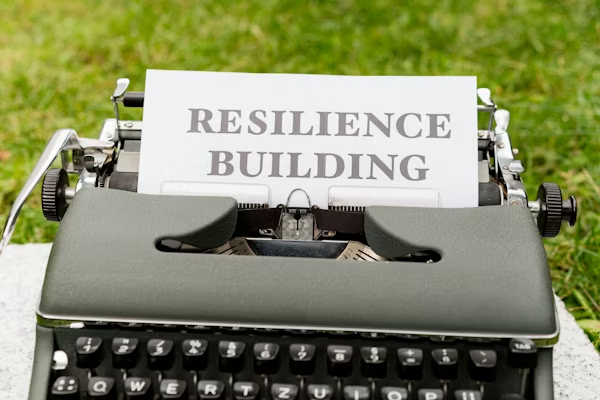
Building Emotional Resilience: Strengthening Psychological Coping in the Indian Context In recent years, conversations around emotional resilience India, the need for effective coping skills India, and long-term mental health growth have gained increasing importance as individuals navigate uncertainty, pressure, and emotional overload. From academic competition and career instability to family responsibilities, societal expectations, and collective trauma, Indians across age groups are required to adapt continuously—often without adequate emotional support. While resilience is frequently misunderstood as toughness or emotional suppression, psychological resilience is actually about flexibility, recovery, and the ability to respond to stress without losing one’s sense of self. In the Indian context, resilience is often expected rather than taught. People are encouraged to “adjust,” “be strong,” or “manage somehow,” which can lead to emotional burnout rather than genuine coping. Understanding emotional resilience from a psychological lens allows individuals to move away from survival mode and toward sustainable emotional wellbeing. Building resilience is not about avoiding distress, it is about learning how to move through it with awareness, support, and self-compassion. Understanding Emotional Resilience from a Psychological Perspective What Is Emotional Resilience? Emotional resilience refers to the ability to adapt to stress, adversity, and emotional challenges while maintaining psychological stability and a sense of meaning. It does not mean the absence of emotional pain, but rather the capacity to recover, recalibrate, and grow through difficult experiences. Psychologically, resilience is shaped by a combination of internal factors (such as emotional regulation, self-beliefs, and coping strategies) and external factors (such as relationships, social support, and cultural context). Resilient individuals still experience sadness, fear, and frustration—but they are less likely to feel overwhelmed or permanently destabilised by them. A foundational explanation of psychological resilience can be explored here:https://en.wikipedia.org/wiki/Psychological_resilience Why Emotional Resilience Is Crucial in India Today High Pressure, Limited Emotional Processing Indian society places strong emphasis on performance, responsibility, and endurance. Emotional struggles are often minimised in favour of productivity or duty, leaving little room for processing stress or vulnerability. Collective and Intergenerational Stress Economic uncertainty, caregiving responsibilities, academic pressure, and unresolved generational trauma all contribute to cumulative emotional load. Stigma Around Emotional Support Seeking help is still associated with weakness for many, which delays the development of healthy coping systems. Rapid Social Change Urbanisation, digital exposure, shifting family structures, and career volatility demand constant emotional adjustment without structured emotional education. Common Myths About Emotional Resilience “Resilient people don’t feel emotions” In reality, resilient individuals feel deeply but regulate emotions effectively. “Resilience means handling everything alone” Healthy resilience includes knowing when to seek support. “Some people are just born resilient” Resilience is a learnable psychological skill, not a fixed trait. An accessible explainer on resilience and emotional coping can be viewed here:https://www.youtube.com/watch?v=NWH8N-BvhAw Core Psychological Components of Emotional Resilience Emotional Regulation The ability to notice, tolerate, and respond to emotions without suppression or overwhelm. Cognitive Flexibility Resilient individuals can reframe setbacks without catastrophising or rigid thinking. Self-Compassion Treating oneself with kindness during failure or stress rather than harsh self-criticism. Sense of Agency Believing that one has influence over responses, even when circumstances cannot be controlled. Secure Support Systems Healthy relationships provide emotional grounding and perspective. Emotional Resilience Across Indian Life Stages Students and Young Adults Academic pressure, identity confusion, and fear of failure demand resilience skills that are rarely taught in formal education. Working Professionals Burnout, job insecurity, and work-life imbalance require emotional recovery mechanisms beyond productivity hacks. Parents and Caregivers Balancing emotional labour, responsibility, and limited personal space makes resilience essential for mental health. Older Adults Health concerns, loss of role identity, and changing family dynamics test emotional adaptability. Case Scenario: A Resilience Gap Arjun, a 34-year-old professional, appears outwardly successful but feels emotionally exhausted. He handles responsibilities efficiently yet struggles with irritability, poor sleep, and emotional numbness. He believes resilience means “pushing through.” In therapy, Arjun learns that his coping system relies on suppression rather than regulation. Building emotional resilience helps him identify stress signals early, respond more compassionately, and recover without burnout. How Therapy Supports Emotional Resilience Building Awareness of Emotional Patterns Therapy helps individuals recognise emotional triggers, stress responses, and habitual coping strategies. Developing Healthier Coping Skills Clients learn grounding techniques, emotional processing skills, and adaptive thinking patterns. Reducing Self-Criticism Resilience grows when internal dialogue becomes supportive rather than punitive. Strengthening Identity and Values Therapy reconnects individuals with purpose and meaning beyond performance. Culturally sensitive platforms like PsyQuench offer counselling services that focus on emotional resilience, coping skill development, and long-term mental health growth within the Indian context. One relevant service can be explored here:https://psyquench.com/services/counselling While platforms such as Amaha are often referenced in global discussions on resilience and mental health, culturally attuned therapy remains especially important for Indian clients. Practical, Psychology-Based Ways to Build Emotional Resilience 1. Emotional Literacy Learning to name emotions accurately reduces internal confusion and distress. 2. Stress Regulation Practices Breathing exercises, grounding techniques, and nervous system regulation support emotional stability. 3. Cognitive Reframing Challenging catastrophic or rigid thinking improves adaptability. 4. Boundary Setting Protecting emotional and mental energy prevents chronic overwhelm. 5. Meaning-Making Connecting stress to values or growth supports long-term resilience. Resilience vs Survival Mode Many Indians function in survival mode—managing responsibilities while emotionally depleted. True resilience allows recovery, rest, and reflection. Survival prioritises endurance; resilience prioritises sustainability. Role of Families, Schools, and Workplaces Emotional resilience should not be an individual burden alone. Families can model emotional expression, schools can teach coping skills, and workplaces can normalise mental health conversations. Mental health professionals play a critical role in translating psychological concepts into everyday coping tools. Summary This blog explored emotional resilience within the Indian context, highlighting why traditional expectations of endurance often replace healthy coping. It explained emotional resilience as a psychological skill involving emotional regulation, cognitive flexibility, self-compassion, and support systems. Through culturally relevant examples and therapeutic insight, the blog emphasised how resilience can be intentionally built through awareness, coping skills, and therapy—supporting long-term mental health growth rather than emotional survival. Conclusion Emotional resilience is not about being unbreakable. it is about
Toxic Relationships in India: Understanding the Psychology of Harmful Bonds

Toxic Relationships in India: Understanding the Psychology of Harmful Bonds Conversations around toxic relationships India, experiences of emotional abuse India, and the growing need for therapy help are becoming increasingly visible as more individuals begin questioning relational patterns that cause emotional harm. In the Indian context, relationships are often viewed as lifelong commitments rooted in sacrifice, adjustment, and endurance. While these values can foster loyalty and connection, they can also make it difficult to recognise when a relationship becomes psychologically damaging. Many individuals remain trapped in harmful bonds because leaving is associated with guilt, shame, social consequences, or fear of being perceived as selfish or disloyal. Toxic relationships are not limited to romantic partnerships. They frequently exist within families, friendships, workplaces, and even caregiving roles. Because emotional abuse is often subtle and normalised, individuals may doubt their own experiences, minimise distress, or blame themselves. Understanding the psychology behind toxic relationships is essential for recognising emotional harm, restoring clarity, and reclaiming agency over one’s emotional wellbeing. Understanding Toxic Relationships from a Psychological Perspective What Is a Toxic Relationship? A toxic relationship is defined by persistent interaction patterns that undermine emotional safety, autonomy, and self-worth. Unlike healthy relationships where conflict exists alongside respect and repair toxic relationships involve recurring cycles of harm without accountability or change. These patterns may include emotional manipulation, control, intimidation, chronic criticism, or conditional affection. From a psychological standpoint, toxic relationships often function through intermittent reinforcement, where moments of care or affection are unpredictably mixed with harm. This creates confusion and emotional dependency, making it difficult for individuals to leave even when they recognise the damage being caused. A foundational explanation of abusive and emotionally harmful relationships can be explored here:https://en.wikipedia.org/wiki/Abusive_relationship Why Toxic Relationships Are Difficult to Identify in India Cultural Normalisation of Endurance Indian cultural narratives frequently praise tolerance, compromise, and emotional restraint especially in close relationships. Suffering is often reframed as maturity or duty, particularly for women and younger family members. As a result, emotional pain is endured rather than questioned. Fear of Social Judgment and Consequences Leaving or confronting a relationship may invite criticism, gossip, or stigma. Concerns about family reputation, marriage prospects, or workplace consequences often silence individuals experiencing emotional abuse. Blurred Emotional Boundaries In collectivistic family systems, personal boundaries are rarely encouraged. Control, intrusion, and decision-making dominance may be justified as care, concern, or authority, making toxicity harder to recognise. Limited Awareness of Emotional Abuse While physical abuse is more easily identified, emotional abuse, gaslighting, invalidation, manipulation is subtle and often invisible. Many individuals do not realise they are being harmed until significant psychological distress develops. Core Psychological Patterns That Maintain Toxic Relationships Trauma Bonding Trauma bonding occurs when emotional pain is followed by brief periods of affection or reassurance. The brain begins associating relief with the person causing harm, strengthening attachment despite abuse. Fear of Abandonment Many individuals remain in toxic relationships due to deep-seated fears of being alone, unloved, or rejected often rooted in early attachment experiences. Internalised Guilt and Responsibility Victims of toxic dynamics often believe it is their responsibility to fix the relationship, tolerate harm, or change themselves. Learned Helplessness Repeated emotional invalidation can lead individuals to feel powerless, believing that no action will improve the situation. Common Signs of Toxic Relationships Emotional Manipulation and Gaslighting The individual’s feelings or perceptions are dismissed, denied, or reframed to make them doubt their reality. Chronic Criticism and Invalidation Nothing feels “good enough,” and appreciation is rare or conditional. Control and Surveillance Choices around time, friendships, clothing, or decisions are monitored or questioned excessively. Fear-Based Interaction Individuals feel anxious, tense, or cautious—constantly trying to avoid conflict or disapproval. An accessible explainer on toxic relationship dynamics can be viewed here:https://www.youtube.com/watch?v=Y9A5wuTtblw Forms of Toxic Relationships in the Indian Context Romantic and Marital Relationships Emotional neglect, jealousy, possessiveness, and verbal abuse may be normalised as love, concern, or authority. Pressure to preserve marriage often overrides emotional safety. Family Relationships Toxic family dynamics may involve emotional blackmail, comparison, control over life choices, or conditional approval particularly between parents and adult children. Friendships One-sided friendships marked by competition, dependency, or subtle humiliation can erode self-esteem over time. Workplace Relationships Toxic supervisors or colleagues may use fear, intimidation, or humiliation under the guise of discipline or performance expectations. Psychological Impact of Toxic Relationships Erosion of Self-Esteem Repeated invalidation leads individuals to question their worth, competence, and perceptions. Chronic Anxiety and Hypervigilance Living in emotionally unsafe environments keeps the nervous system in a constant state of alert. Depression and Emotional Exhaustion Feeling trapped in harmful dynamics often leads to hopelessness, numbness, or burnout. Loss of Identity and Autonomy Over time, individuals may disconnect from their preferences, goals, and sense of self. Case Scenario: A Common Experience Priya, a 28-year-old professional, feels emotionally drained in her romantic relationship. Her partner frequently dismisses her emotions, questions her judgment, and accuses her of being “too sensitive.” Although there is no physical violence, Priya constantly feels anxious, guilty, and confused. Family members encourage patience and adjustment. In therapy, Priya learns to identify emotional abuse patterns, validate her experiences, and gradually rebuild her self-trust leading to greater clarity about her boundaries and choices. How Therapy Helps Untangle Toxic Relationships Developing Awareness Without Self-Blame Therapy helps individuals objectively recognise toxic patterns without minimising harm or blaming themselves. Rebuilding Emotional and Psychological Boundaries Clients learn how to identify limits, communicate needs, and protect emotional space. Addressing Attachment and Trauma Bonds Therapeutic work explores emotional dependency, fear of abandonment, and early relational wounds that maintain harmful bonds. Strengthening Self-Trust and Agency Therapy supports individuals in reconnecting with their inner voice and decision-making capacity. Culturally sensitive platforms like PsyQuench offer counselling services that support individuals navigating toxic relationships, emotional abuse, and boundary-setting within the Indian context. One relevant service can be explored here:https://psyquench.com/services/counselling While platforms such as BetterHelp are often mentioned in global discussions on relationship therapy, culturally grounded understanding is particularly crucial in India. Healing Within or After Toxic Relationships Grieving the Relationship You Hoped For
Financial Stress & Mental Health: Understanding the Psychological Impact of Money Pressure in India

Financial Stress & Mental Health: Understanding the Psychological Impact of Money Pressure in India Conversations around financial stress in India, rising money anxiety, and the growing need for therapy for stress have become increasingly relevant as individuals and families navigate economic uncertainty, career instability, inflation, and rising living costs. In the Indian context, money is rarely just about numbers; it is closely tied to safety, identity, family responsibility, social status, and personal worth. From early adulthood, many Indians are taught that financial stability equals success, maturity, and reliability. As a result, financial strain often extends far beyond budgeting challenges and becomes an emotional burden that affects mental health, relationships, self-esteem, and even physical wellbeing. Whether it involves student loans, unstable employment, debt, caregiving responsibilities, or the pressure to “do well” financially, money-related stress has emerged as one of the most pervasive yet least openly discussed contributors to psychological distress in India today. Understanding Financial Stress from a Psychological Perspective What Is Financial Stress? Financial stress refers to the emotional, cognitive, and psychological strain associated with money-related concerns. It includes persistent worry about income stability, debt, expenses, future security, savings, and perceived financial inadequacy. Unlike temporary financial worry, chronic financial stress remains active over long periods, continuously activating anxiety responses in the mind and body. From a psychological standpoint, money stress often triggers fear-based thinking connected to survival and safety. Concerns such as “What if I can’t manage?”, “What if I fail my family?”, or “What if I lose everything?” activate the nervous system’s threat response. Over time, this heightened state of alert becomes chronic, impairing emotional regulation, concentration, sleep, and decision-making. In collectivistic cultures like India, where financial stability is equated with responsibility and respectability, money stress is deeply personal. Financial difficulty is often internalised as personal failure rather than recognised as a response to systemic or economic pressures. A foundational explanation of financial stress and its psychological effects can be explored here:https://en.wikipedia.org/wiki/Financial_stress Why Financial Stress Is So Intense in India Cultural Emphasis on Financial Responsibility In many Indian families, individuals are expected to financially support parents, siblings, and sometimes extended family members. This responsibility often begins early, sometimes immediately after graduation and continues well into adulthood. While this sense of duty can be meaningful, it also creates sustained pressure, guilt, and fear of falling short. Many individuals feel they cannot rest, change careers, or take risks because others depend on them financially. This constant responsibility leaves little emotional space for self-care or exploration, increasing burnout and anxiety. Career Instability and Competition India’s job market is marked by intense competition, contract-based employment, frequent job transitions, and growing concerns about layoffs and automation. Even individuals who are employed may feel uncertain about long-term stability. This uncertainty fuels constant worry about savings, career progression, and future planning. Young professionals, in particular, often feel trapped between ambition and fear, wanting growth but terrified of financial disruption. This tension creates chronic stress that rarely finds emotional outlets. Social Comparison and Lifestyle Pressure Visible markers of success owning property, luxury purchases, weddings, travel, and lifestyle upgrades are heavily emphasised in Indian society. Social media further amplifies these comparisons, creating unrealistic standards of financial success. Many individuals feel pressured to “keep up,” even when finances are stretched thin. This comparison-driven stress often leads to overspending, guilt, and a constant sense of inadequacy, regardless of actual income. Limited Conversations About Money and Mental Health Despite its emotional impact, financial stress is rarely discussed openly. Money-related distress is often normalised (“everyone is stressed”) or silenced due to shame. Emotional struggles linked to money are rarely validated, leaving individuals to cope alone. This isolation intensifies anxiety and reinforces self-blame. How Financial Stress Affects Mental Health Anxiety and Constant Worry Persistent financial uncertainty keeps the nervous system in a heightened state of vigilance. Individuals may constantly calculate expenses, anticipate worst-case scenarios, or replay financial decisions in their minds. This ongoing mental load results in restlessness, irritability, difficulty concentrating, and chronic worry. Depression and Hopelessness When financial stress persists despite effort, individuals may begin to feel helpless or defeated. Thoughts such as “No matter what I do, it’s never enough” or “I will never feel secure” contribute to low mood, loss of motivation, and emotional withdrawal. Shame around money struggles further deepens depressive symptoms. Sleep Disturbances Financial worries are a major contributor to insomnia. Many individuals report racing thoughts at night, difficulty falling asleep, or waking frequently with anxiety. Sleep deprivation then worsens emotional regulation, increasing irritability and vulnerability to stress. Relationship Conflict Money stress is one of the most common sources of conflict in families and romantic relationships. Disagreements about spending, saving, priorities, or financial roles can lead to resentment, emotional distance, and communication breakdown. In Indian households, where finances are often shared, these conflicts can involve multiple family members, increasing emotional strain. Financial Stress Across Different Life Stages Students and Young Adults Education loans, uncertain career paths, and pressure to become financially independent create intense stress during early adulthood. Many young people feel they cannot “afford” mistakes, exploration, or rest, leading to anxiety and self-doubt. Working Professionals Balancing daily expenses, savings, family responsibilities, and long-term planning often leads to emotional exhaustion. Many professionals appear outwardly successful but experience constant internal pressure and fear of financial instability. Parents and Caregivers School fees, healthcare costs, household expenses, and retirement planning create layered stress. Parents often prioritise others’ needs while suppressing their own emotional distress. Older Adults Concerns about savings depletion, medical expenses, and dependency on children contribute to late-life financial anxiety. Loss of income combined with health concerns intensifies emotional vulnerability. Case Scenario: A Common Experience Neha, a 31-year-old professional, earns a stable income but experiences constant anxiety about money. She supports her parents, pays rent in a metro city, and worries about long-term security. Despite budgeting carefully, she feels guilty when spending on herself and struggles to relax. In therapy, Neha realises that her distress is not only about finances but about a deep fear of failure and responsibility.


