Didn’t Get an RCI Seat? What to Do Next Without Wasting a Year

If you did not secure an RCI clinical psychology seat, the next step is to confirm exactly what the official result means. A waitlist, an unannounced later round and a final rejection are different situations. After that, compare remaining recognised programmes, the practical cost of applying elsewhere, and a plan for the next admission cycle. This PsyQuench guide is for that decision moment. It cannot promise a vacancy or tell you that an unrelated course will lead to the same professional status. A year can be valuable if you know what qualification you are working toward and use the time deliberately.
Your First Steps After Missing an RCI Seat
Before deciding what to study next, read the result and the institution’s current admission notice again. Are you ineligible, below the selection cutoff, on a waitlist or simply not selected in the first round? Has the institution announced another round? What date must a waitlisted student respond? Answers should come from the institution, not a forwarded message or a discussion thread.
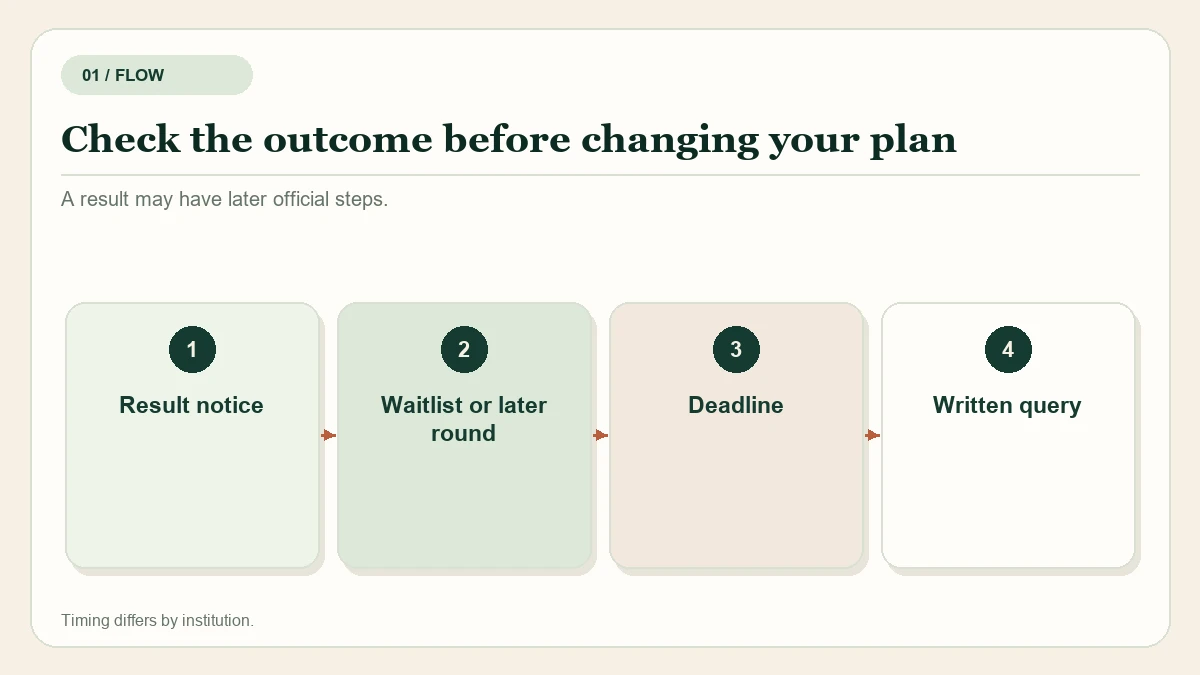
Keep the programme name beside the result. A university may run several psychology courses, and a place in one is not a place in the RCI-recognised professional course. Save the official notice, result page and any email clarification. If something is unclear, send a brief written question to the admissions office and identify the exact course and intake.
There is a strong temptation to pay for the first available alternative because it feels better than waiting. Pause until you know whether a live official option exists. The RCI approved-institutions page tells you which programmes have approval; it does not tell you which have vacant seats today. The institution’s current admission process is the source for that information.
Why Seats Are So Competitive
Professional programmes have a sanctioned intake: the number approved for a particular course and period. A small number at a preferred institution or city can make the choice feel constrained. The RCI list shows those intake figures, but it does not show the number or strength of applicants, so it cannot support a national acceptance-rate claim. “Competitive” is a reasonable description of a limited-seat decision; an exact probability would require data we do not have.
Location can tighten the practical choice further. A student who can only study near home is comparing fewer realistic programmes than someone able to relocate. Eligibility conditions can also remove some options before an entrance exam is considered. None of this means a rejected applicant lacks ability. It means selection is a particular process with limited places and multiple conditions.
Be wary of stories that claim one mark, one internship or one preparation course is the secret to admission. The useful evidence is your own result, the programme’s stated selection criteria and the qualifications you can improve or document. If an institution publishes a breakdown or offers feedback, use it. If it does not, do not invent a reason for the outcome.
Checking Other Recognized College Options
The RCI’s regular-mode list can help you expand a shortlist beyond one institution. Search for the exact professional programme, its approval period and the academic session that concerns you. Check the institution’s current notice for applications and eligibility. The first article in this series provides a dated comparison of selected M.Clin.Psy. programmes; use it as a navigation aid, then return to the official sources before acting.
Do not confuse sanctioned intake with an unfilled seat. An institution might have an approved intake of 10 and no application window remaining. Another may have a current notice, but your degree record may not meet its entry conditions. Both checks are necessary. If the university lists a different course name from RCI’s current M.Clin.Psy. nomenclature, ask it to identify the matching regulator entry.
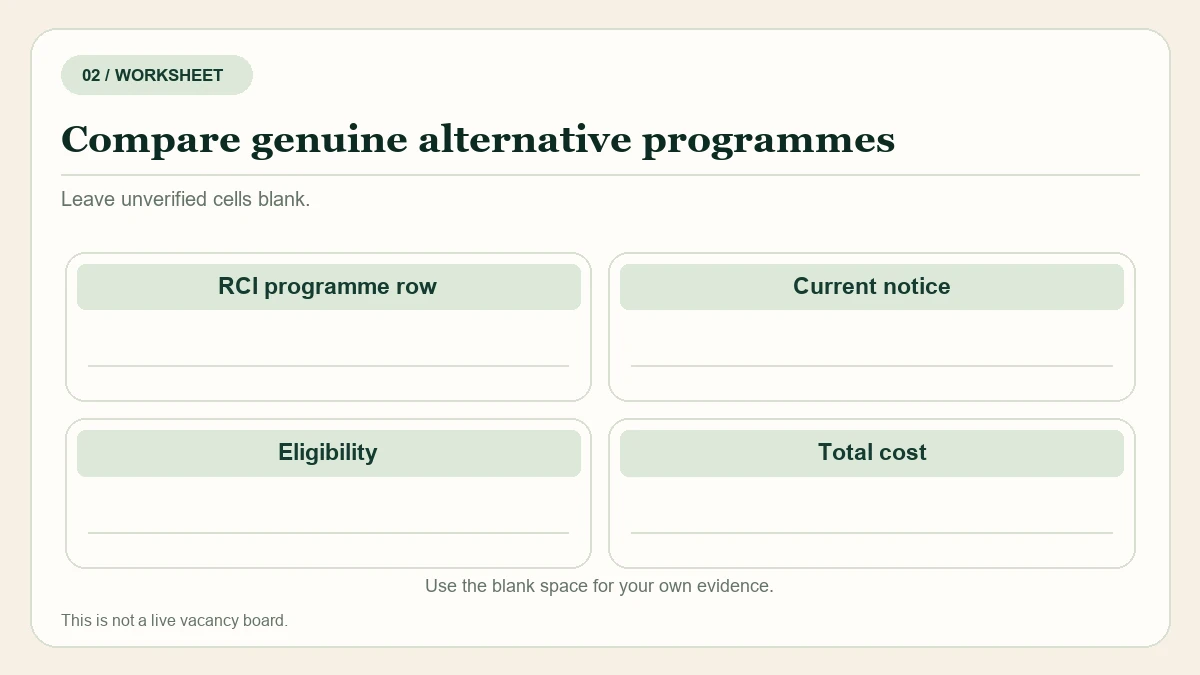
Use a tracker with columns for institution, RCI course and approval span, eligibility, current application status, deadline and total expected cost. Mark any unknown as unknown. A list that makes uncertainty visible is more useful than a polished table built from outdated admissions pages.
Should You Apply Outside Your Preferred City?
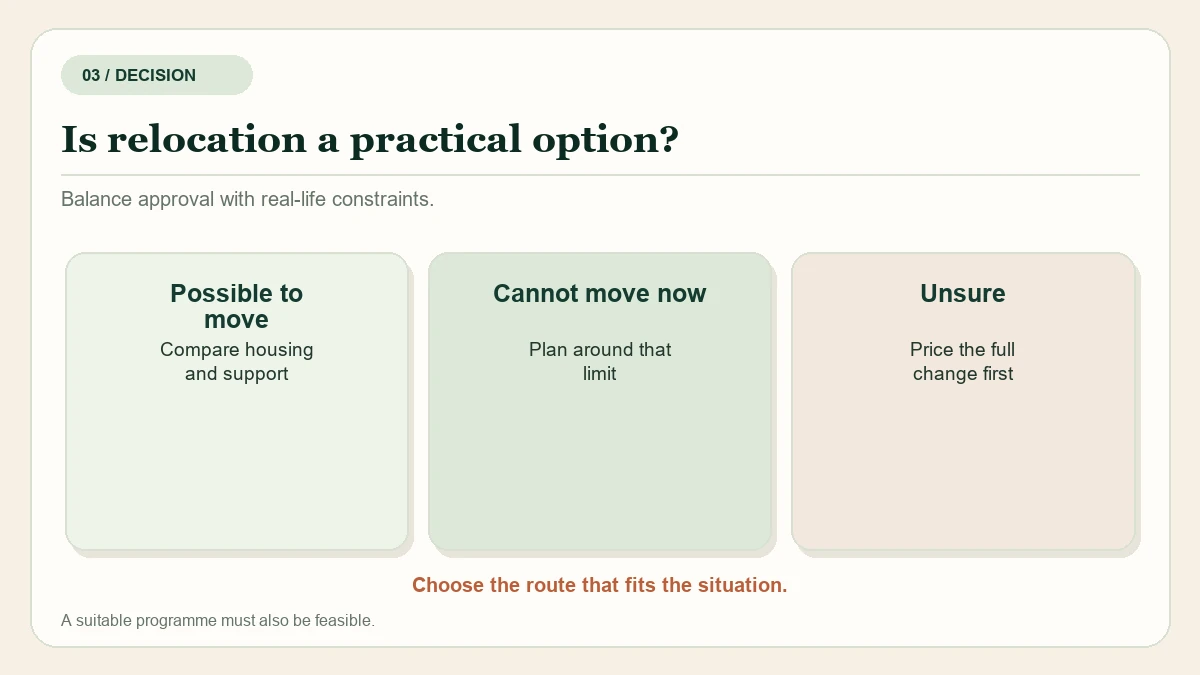
Relocating can create more options, but it is not automatically the best choice. Compare the approved programme first, then the practical conditions: tuition, housing, travel, support network and any responsibilities you have at home. A full-time professional course can make paid work difficult, so the budget should cover more than the headline fee.
Ask what you would gain from moving. Is there a current approved programme with an open admissions process? Does the learning environment fit your goal? Could you sustain the living arrangement for the course duration? If the answer is yes, an unfamiliar city may be worth considering. If the financial or family cost is too high, declining to relocate can be a rational decision rather than a lack of ambition.

Avoid city rankings that treat every college in a location as equivalent. Recognition attaches to a programme and period. A famous city has no regulatory value by itself. This comparison is about a real course you can attend, not a keyword list of Mumbai, Pune, Delhi or Bengaluru.
What If No Suitable Seat Is Available This Year?
Once official remaining rounds and feasible locations have been checked, you may find that no suitable option remains for this cycle. That is disappointing, but it gives you a clearer problem to solve: what would make next year’s application stronger or more appropriate? The answer could involve an eligibility gap, a wider geographic shortlist, preparation for selection, finances or a change in professional goal.
Write down which part of the route is uncertain. If you have a three-year BA and need to satisfy the RCI entry condition through a bridge or first year of a psychology master’s, that academic work has a specific purpose. If you are already eligible but did not gain a place, a different plan may focus on entrance preparation and a broader set of verified programmes. If you no longer want clinical practice, an alternative academic route may be genuinely preferable.
This is why “take any course so the year is not wasted” is poor advice. A course can be worthwhile for its own learning or career direction. It becomes a costly detour if you buy it only because its name sounds close to the qualification you missed.
Retake Admission or Choose Another Academic Route?
Compare the options against the job you ultimately want. If you remain committed to RCI clinical psychology, ask whether an additional degree fixes a documented eligibility gap or simply fills time. If you are considering research, school support, organisational work or another profession, a different qualification may fit that revised goal. The decision is not a moral test of persistence.
Use six questions. What qualification does the target role require? What do you already have? What does the proposed course actually award? Is its mode and recognition appropriate? What will it cost in money and time? What evidence will you have at the end that you do not have now? These questions make the comparison concrete.
Two applicants may make different good decisions. One can afford a planned reapplication year and wants to focus on the entrance process. Another needs paid work and chooses a related role while preparing. A third discovers that research is more appealing than clinical training. None of these examples predicts an outcome. They show why “gap year versus another degree” cannot be answered without the person’s goal and circumstances.
Can a Non-RCI Course Lead to the Same Professional Status?
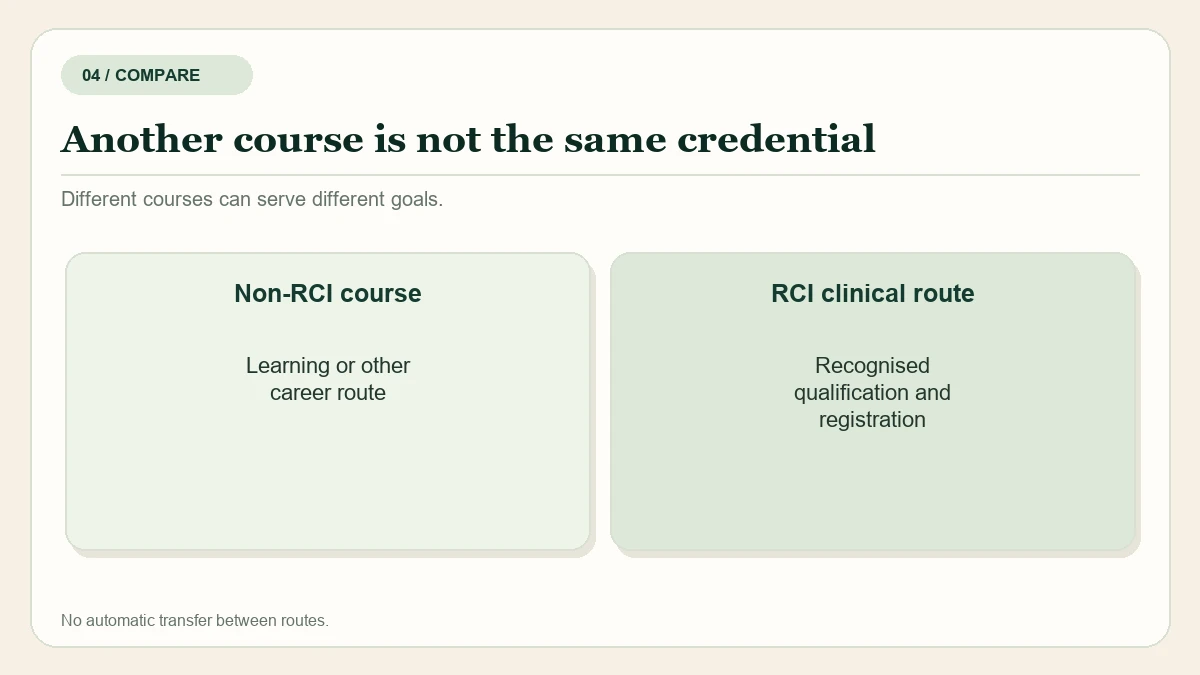
Do not assume it can. The RCI lists specific recognised professional programmes and maintains a separate registration framework. An ordinary MA, MSc, diploma or short certificate may have real academic or practical value, but it does not become the same professional qualification because it covers clinical topics or includes an internship. PsyQuench’s guide to RCI and non-RCI psychology courses explains that distinction further.
Check any alternative against the RCI programme list and the current approved-institution document. Ask the provider exactly what qualification it awards and which regulator, if any, recognises the specific course for the professional status you want. Request an official source rather than relying on “RCI-aligned,” “clinical exposure” or similar marketing language.
This caution is not a judgment that only RCI courses are worthwhile. It is a warning against buying an alternative under a mistaken assumption. A non-RCI course may be the right choice for a different job or academic goal. Give it credit for what it does, and do not make it stand in for what it does not.
Preparing for the Next Admission Cycle
Begin with documents. The RCI M.Clin.Psy. guidelines set the academic baseline, and each institution’s notice gives the current application process. Put your degree duration, marks and any bridge/master’s-year record beside those requirements. Resolve eligibility questions in writing well before an application window closes.
Next, make a preparation plan based on the actual selection method. Review subjects you find difficult, practise explaining your reasoning and become familiar with research and ethical questions. If an institution provides a syllabus or sample process, use it. Avoid treating a commercial coaching schedule as the official admission calendar.
Monitor RCI approval and institution notices at regular intervals, not every hour. A simple monthly check can become more frequent near a known admission season, but do not invent a universal national date. Keep a budget and decide in advance how many applications and locations are feasible. Preparation includes being ready to submit accurately, not only studying content.
Using the Gap Period to Build Useful Skills
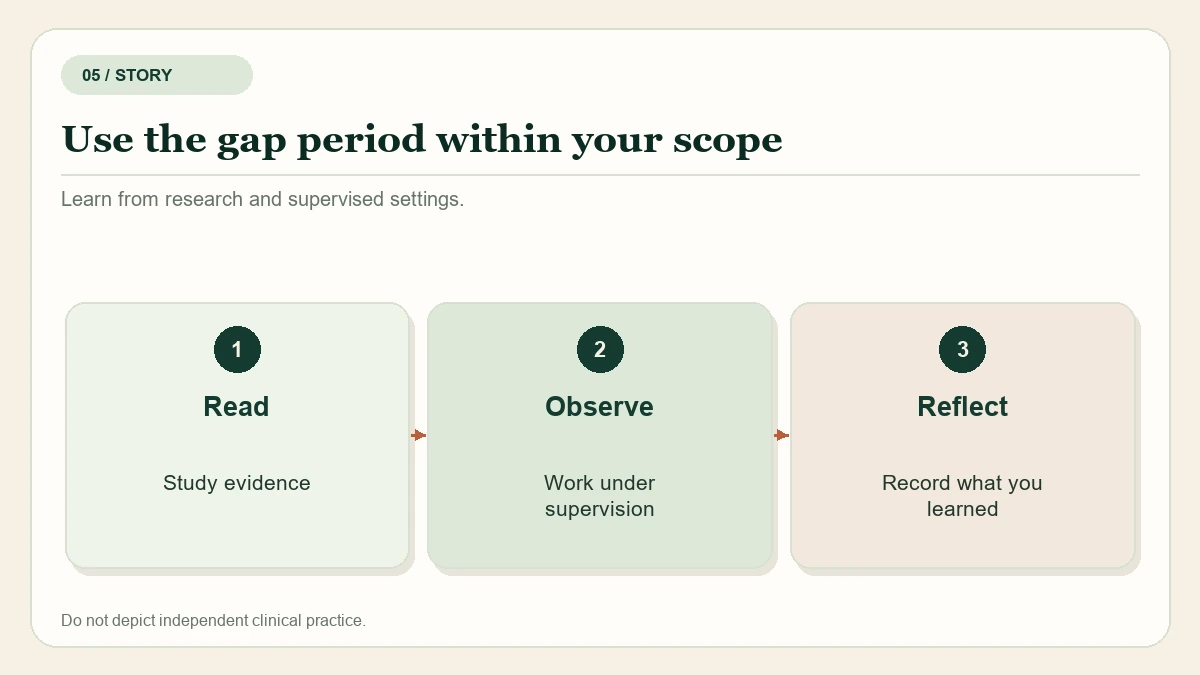
Experience can be worthwhile when it has a clear purpose and appropriate supervision. A research project may strengthen evidence-reading and writing. An internship may reveal what a clinical or community setting is like. Volunteering may develop communication and teamwork. None of these alone replaces the supervised professional training or registration required for a regulated clinical title.
Ask practical questions before accepting an opportunity: Who supervises the work? What tasks may a student perform? How will feedback be given? Are confidentiality and client boundaries clear? What will you be able to describe honestly afterward? PsyQuench’s guide to psychology internships in India that build skills is useful for assessing this part of a plan.
Leave room for paid work, family responsibilities and rest if you need them. A year with a job and steady preparation is not less serious than a year filled with unpaid certificates. The measure is whether your activities fit your goal and circumstances, not how many lines they add to a résumé.
A Practical Plan for Your Next Twelve Months
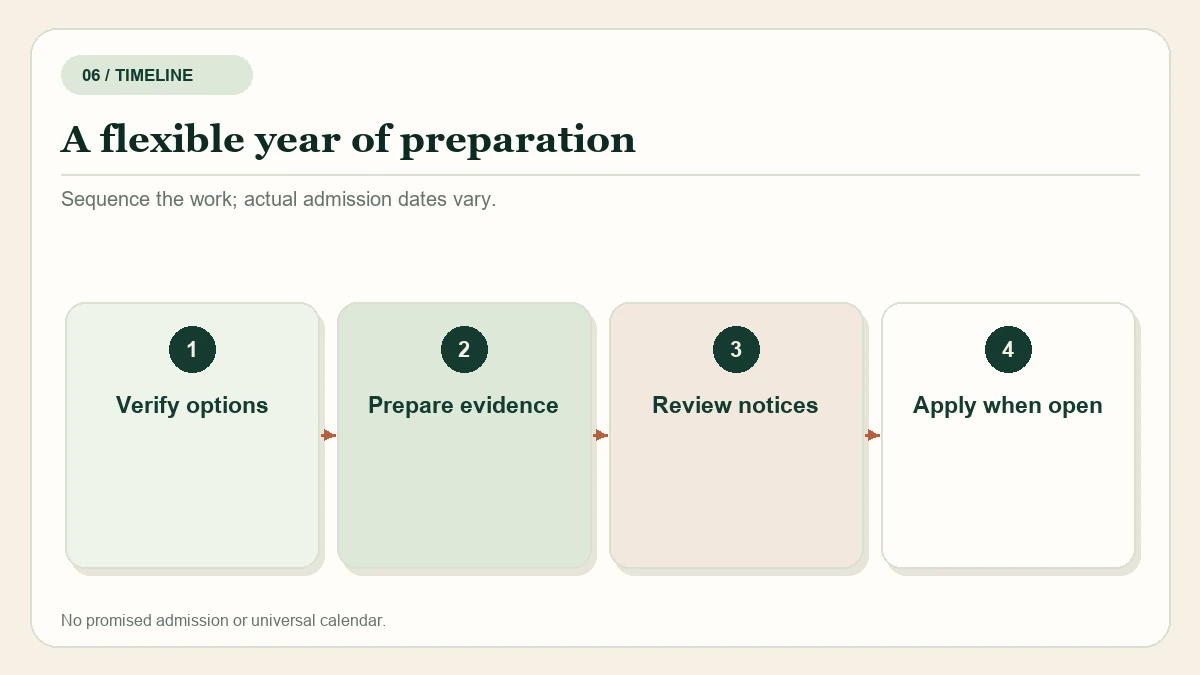
In the first month, confirm the final outcome of this admission cycle and write your target qualification in one sentence. List eligibility gaps and programmes you can realistically consider. Over the next few months, gather documents, review the selection process and choose one supervised or research experience if it serves a real gap. Set a budget before paying for another course.
Mid-year, review what you have learned. Has the professional goal stayed the same? Have you confirmed the bridge or master’s-year condition if it applies to you? Are the alternative locations still feasible? Adjust the plan rather than following a calendar that no longer fits. PsyQuench’s discussion of hands-on training in clinical psychology can help you judge whether a learning opportunity has genuine depth.
As the next notices appear, verify the current RCI approval and institution-specific requirements again. Prepare applications from those documents, not last year’s screenshots. Leave space for disappointment and for a revised choice. A twelve-month plan is useful because it turns a vague “try again” into decisions you can check; it cannot guarantee a seat.
Frequently Asked Questions
Does the RCI list show currently vacant seats?
No. It shows approved programmes and sanctioned intake. Check the institution’s current admission notice or ask its office for live application information.
Will a non-RCI MA make me an RCI clinical psychologist?
Not by itself. Verify the exact recognised professional route and CRR requirements. The value of another MA should be judged by its actual purpose.
Is a gap year automatically bad for my career?
No. What matters is your goal, financial situation and what you can do during the period. A planned year can be useful; it is not an admission guarantee.
Can an internship replace professional clinical training?
No. It can build insight and skills within its proper scope, but it does not substitute for an RCI-recognised qualification or registration.
A Year Can Move You Forward
Missing a seat is a result from one admission process, not a full judgment of your future. Confirm the official position, test any remaining approved options and decide whether reapplication or another goal fits you better. Then make the year answerable to that decision. The point is not to stay busy at all costs; it is to spend your time on something that genuinely changes your next choice.
Publication and visual brief
Article word count: 2162 | Source check: 15 November 2026 | Status: editorial review before publication
SEO and publishing details
SEO title: No RCI Clinical Psychology Seat? Your Next Steps
Slug: no-rci-clinical-psychology-seat-next-steps
Meta description: Missed an RCI clinical psychology seat? Check official remaining options, compare a gap year with another degree, and plan the next cycle.
Primary keyword: what to do if not selected for RCI clinical psychology
Category: Psychology Courses and Careers
Intent: Post-result decision
Schema: Article; FAQPage only if eligible
Canonical: Self-referencing; separate from college directory and BA pathway
Reviewer: RCI admissions or regulatory specialist, name only after verification
Update note: Recheck each live admission notice before publication
Incoming links: RCI-vs-non-RCI guide; internship guide; hands-on training guide
Final editorial checks
Check 2,000-plus words, 10 H2 order, three internal links, no fabricated vacancies or acceptance rates, and clear qualification limits.
Image production plan
Image 1
Featured after title. Purpose: turn setback into options without promising a seat. Concept: student at a desk with result letter and four clear paths ahead, calm editorial illustration. Text: “No RCI Seat? What Next”. Prompt: Indian psychology applicant considering next steps after an admission result, four conceptual paths, hopeful but restrained, no invented institution logos, readable headline space. Landscape 16:9. Filename: no-rci-seat-next-steps-featured.png. Alt: Applicant reviewing options after an RCI clinical psychology admission setback. Accuracy: no guarantee of later offer.
Image 2
Under H2 01. Purpose: clarify immediate checks. Concept: result, waitlist, notice and deadline checklist with generic icons. Prompt: Clean first-steps checklist for admission outcome verification, four labels, no fake dates. Portrait 4:5. Filename: rci-admission-result-checklist.png. Alt: Checklist for verifying an admission result and official later rounds. Accuracy: institution-specific timing.
Image 3
Under H2 03. Purpose: compare genuine options. Concept: four-column matrix programme approval, current notice, eligibility, cost, blank fields. Prompt: Printable college-option matrix with four readable headings and empty rows, no institution rankings. Landscape 16:9. Filename: alternative-rci-programmes-matrix.png. Alt: Worksheet for comparing approved clinical psychology programmes. Accuracy: not a live vacancy list.
Image 4
Under H2 07. Purpose: distinguish courses. Concept: general MA/certificate on one side, RCI recognised qualification on another, no automatic arrow. Prompt: Simple credential distinction infographic with clear labels and no official seals. Square 1:1. Filename: non-rci-vs-rci-route.png. Alt: Diagram distinguishing a non-RCI course from the RCI professional route. Accuracy: does not devalue alternative careers.
Image 5
Under H2 09. Purpose: show skills with proper scope. Concept: supervised research and observation as two learning scenes, with supervisor visible. Prompt: Two-panel educational illustration of student research and supervised observation, no independent clinical practice depicted. Landscape 3:2. Filename: gap-year-skills-psychology.png. Alt: Supervised ways to build research and practical skills during a gap period. Accuracy: illustrative only.
Image 6
Under H2 10. Purpose: plan year. Concept: twelve-month calendar divided into verify, prepare, review, apply, with flexible arrows. Prompt: Clear flexible 12-month preparation timeline, no exact admission months or guarantee, premium editorial design. Landscape 16:9. Filename: rci-reapplication-year-plan.png. Alt: Flexible year plan for preparing a future clinical psychology application. Accuracy: dates depend on institution.
Build Clinical Competencies During Your Prep Year
Didn’t secure an RCI seat this cycle? Don’t let your year go uncredited. Gain hands-on exposure in psychometrics, case conceptualisation, and supervised ethics. You can Explore Research & Statistics Course or get started directly below: