
Building Emotional Resilience: Strengthening Psychological Coping in the Indian Context
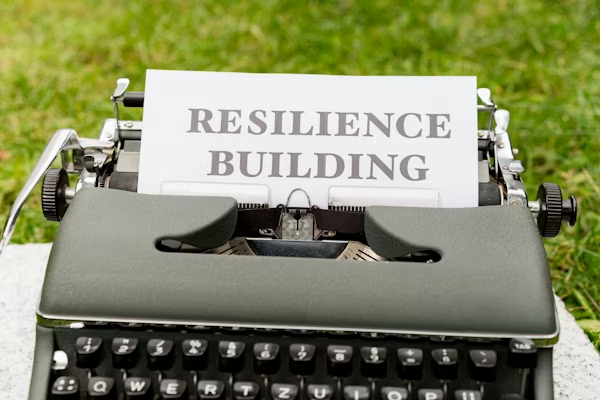
Building Emotional Resilience: Strengthening Psychological Coping in the Indian Context In recent years, conversations around emotional resilience India, the need for effective coping skills India, and long-term mental health growth have gained increasing importance as individuals navigate uncertainty, pressure, and emotional overload. From academic competition and career instability to family responsibilities, societal expectations, and collective trauma, Indians across age groups are required to adapt continuously—often without adequate emotional support. While resilience is frequently misunderstood as toughness or emotional suppression, psychological resilience is actually about flexibility, recovery, and the ability to respond to stress without losing one’s sense of self. In the Indian context, resilience is often expected rather than taught. People are encouraged to “adjust,” “be strong,” or “manage somehow,” which can lead to emotional burnout rather than genuine coping. Understanding emotional resilience from a psychological lens allows individuals to move away from survival mode and toward sustainable emotional wellbeing. Building resilience is not about avoiding distress, it is about learning how to move through it with awareness, support, and self-compassion. Understanding Emotional Resilience from a Psychological Perspective What Is Emotional Resilience? Emotional resilience refers to the ability to adapt to stress, adversity, and emotional challenges while maintaining psychological stability and a sense of meaning. It does not mean the absence of emotional pain, but rather the capacity to recover, recalibrate, and grow through difficult experiences. Psychologically, resilience is shaped by a combination of internal factors (such as emotional regulation, self-beliefs, and coping strategies) and external factors (such as relationships, social support, and cultural context). Resilient individuals still experience sadness, fear, and frustration—but they are less likely to feel overwhelmed or permanently destabilised by them. A foundational explanation of psychological resilience can be explored here:https://en.wikipedia.org/wiki/Psychological_resilience Why Emotional Resilience Is Crucial in India Today High Pressure, Limited Emotional Processing Indian society places strong emphasis on performance, responsibility, and endurance. Emotional struggles are often minimised in favour of productivity or duty, leaving little room for processing stress or vulnerability. Collective and Intergenerational Stress Economic uncertainty, caregiving responsibilities, academic pressure, and unresolved generational trauma all contribute to cumulative emotional load. Stigma Around Emotional Support Seeking help is still associated with weakness for many, which delays the development of healthy coping systems. Rapid Social Change Urbanisation, digital exposure, shifting family structures, and career volatility demand constant emotional adjustment without structured emotional education. Common Myths About Emotional Resilience “Resilient people don’t feel emotions” In reality, resilient individuals feel deeply but regulate emotions effectively. “Resilience means handling everything alone” Healthy resilience includes knowing when to seek support. “Some people are just born resilient” Resilience is a learnable psychological skill, not a fixed trait. An accessible explainer on resilience and emotional coping can be viewed here:https://www.youtube.com/watch?v=NWH8N-BvhAw Core Psychological Components of Emotional Resilience Emotional Regulation The ability to notice, tolerate, and respond to emotions without suppression or overwhelm. Cognitive Flexibility Resilient individuals can reframe setbacks without catastrophising or rigid thinking. Self-Compassion Treating oneself with kindness during failure or stress rather than harsh self-criticism. Sense of Agency Believing that one has influence over responses, even when circumstances cannot be controlled. Secure Support Systems Healthy relationships provide emotional grounding and perspective. Emotional Resilience Across Indian Life Stages Students and Young Adults Academic pressure, identity confusion, and fear of failure demand resilience skills that are rarely taught in formal education. Working Professionals Burnout, job insecurity, and work-life imbalance require emotional recovery mechanisms beyond productivity hacks. Parents and Caregivers Balancing emotional labour, responsibility, and limited personal space makes resilience essential for mental health. Older Adults Health concerns, loss of role identity, and changing family dynamics test emotional adaptability. Case Scenario: A Resilience Gap Arjun, a 34-year-old professional, appears outwardly successful but feels emotionally exhausted. He handles responsibilities efficiently yet struggles with irritability, poor sleep, and emotional numbness. He believes resilience means “pushing through.” In therapy, Arjun learns that his coping system relies on suppression rather than regulation. Building emotional resilience helps him identify stress signals early, respond more compassionately, and recover without burnout. How Therapy Supports Emotional Resilience Building Awareness of Emotional Patterns Therapy helps individuals recognise emotional triggers, stress responses, and habitual coping strategies. Developing Healthier Coping Skills Clients learn grounding techniques, emotional processing skills, and adaptive thinking patterns. Reducing Self-Criticism Resilience grows when internal dialogue becomes supportive rather than punitive. Strengthening Identity and Values Therapy reconnects individuals with purpose and meaning beyond performance. Culturally sensitive platforms like PsyQuench offer counselling services that focus on emotional resilience, coping skill development, and long-term mental health growth within the Indian context. One relevant service can be explored here:https://psyquench.com/services/counselling While platforms such as Amaha are often referenced in global discussions on resilience and mental health, culturally attuned therapy remains especially important for Indian clients. Practical, Psychology-Based Ways to Build Emotional Resilience 1. Emotional Literacy Learning to name emotions accurately reduces internal confusion and distress. 2. Stress Regulation Practices Breathing exercises, grounding techniques, and nervous system regulation support emotional stability. 3. Cognitive Reframing Challenging catastrophic or rigid thinking improves adaptability. 4. Boundary Setting Protecting emotional and mental energy prevents chronic overwhelm. 5. Meaning-Making Connecting stress to values or growth supports long-term resilience. Resilience vs Survival Mode Many Indians function in survival mode—managing responsibilities while emotionally depleted. True resilience allows recovery, rest, and reflection. Survival prioritises endurance; resilience prioritises sustainability. Role of Families, Schools, and Workplaces Emotional resilience should not be an individual burden alone. Families can model emotional expression, schools can teach coping skills, and workplaces can normalise mental health conversations. Mental health professionals play a critical role in translating psychological concepts into everyday coping tools. Summary This blog explored emotional resilience within the Indian context, highlighting why traditional expectations of endurance often replace healthy coping. It explained emotional resilience as a psychological skill involving emotional regulation, cognitive flexibility, self-compassion, and support systems. Through culturally relevant examples and therapeutic insight, the blog emphasised how resilience can be intentionally built through awareness, coping skills, and therapy—supporting long-term mental health growth rather than emotional survival. Conclusion Emotional resilience is not about being unbreakable. it is about
7 Signs You Might Need Therapy as a Student or Young Adult

Feeling overwhelmed? Learn the emotional and mental signs that indicate therapy can help students and professionals. Many students and young adults in India push themselves to excel, academically, professionally, and socially. But somewhere along the way, the weight of expectations, comparisons, and silent struggles can become too much. Therapy for students India is not just for crises; it’s a proactive step to build resilience, emotional balance, and mental clarity. Here’s a detailed look at when seeking mental health help might actually be the healthiest choice you can make. Feeling Persistently Overwhelmed or Exhausted Everyone feels stressed during exams or deadlines. But if the stress never seems to fade, even after rest or breaks, it could be more than just temporary fatigue. You might: A therapist can help unpack the reasons behind this chronic overwhelm and guide you toward healthier coping strategies. Loss of Interest in Things You Used to Enjoy One of the clearest signs you might need therapy as a student or young adult is losing passion for hobbies, socializing, or even studies you once loved. This can look like: This loss of interest could signal emotional burnout or even early symptoms of depression. Talking to a professional can help you reconnect with your life. Difficulty Concentrating or Making Decisions When your mind feels constantly foggy, everyday decisions, big or small, can feel overwhelming. You might notice: Therapy can help identify whether this is linked to anxiety, ADHD, or stress, and teach practical strategies to manage it. Feeling Isolated Even When Surrounded by People You might be active on social media or attend classes regularly, yet feel deeply alone inside. Signs include: Professional therapy for students India can create a safe space where you feel heard without judgment. Unexplained Mood Swings or Emotional Outbursts If you find yourself: These can be signs of deeper emotional struggles. Therapy helps identify triggers and teaches emotional regulation techniques. Constant Negative Self-Talk or Feeling “Not Good Enough” Do you catch yourself thinking: Persistent negative self-talk erodes confidence and can deepen anxiety or depression. Therapy provides tools to challenge and reframe these thoughts. Avoiding Responsibilities or Turning to Unhealthy Coping Skipping classes, procrastinating important work, or relying on alcohol, binge-watching, or overeating to escape stress could be signs you’re silently struggling. Rather than guilt, see this as a sign you may need help. Also Read: 6 Signs You May Benefit from Trauma Counseling – psychology Summary Feeling overwhelmed, losing interest in life, struggling to focus, or isolating yourself are not things to brush aside. They are signs your mind and heart might need extra care. Therapy for students in India isn’t only about solving problems; it’s about learning to thrive despite them. Recognizing these signs early can protect your mental well-being and improve every part of your life, academics, friendships, and self-esteem. Conclusion In today’s competitive world, mental health challenges among students and young adults are more common than most realize. If you see yourself in any of these signs, persistent stress, loss of joy, isolation, mood swings, negative self-talk, or unhealthy coping, it may be time to reach out. Seeking mental health help isn’t weakness; it’s wisdom. Therapy can offer a safe, confidential space to understand your emotions and build healthier habits, so you can live, learn, and grow fully. Ready to put your mental well-being first? Book a confidential session with our licensed psychologists today and take the first step toward a calmer, healthier, and more confident you. FAQs Q1: Is it normal for students in India to need therapy?Yes! College and school life today comes with intense academic pressure, social media comparisons, and future career stress. Seeking therapy for students in India is becoming more common and is a healthy, proactive step, not a sign of weakness. Q2: What kind of mental health help can therapy offer students?Therapy can help students better manage anxiety, stress, procrastination, and negative self-talk. It also teaches coping strategies, improves emotional regulation, and boosts confidence and communication skills, beneficial for both personal and academic life. Q3: How do I know if my problems are “big enough” for therapy? If you’re consistently feeling overwhelmed, sad, isolated, or notice mood swings and negative thoughts affecting your daily life, it’s enough reason to talk to a professional. You don’t have to wait for a crisis to seek mental health help. Q4: Are student therapy sessions in India confidential?Yes. By law and professional ethics, therapists must keep your information private (except in rare emergencies where safety is at risk). Confidentiality helps you open up honestly without fear. Q5: Can online therapy help students as much as in-person sessions?Absolutely. Online therapy for students India has become popular, making mental health help more accessible, even for those in smaller towns or with busy schedules. What matters most is the quality of the therapist and your comfort with the process. Q6: How do I start therapy as a student?Begin by talking to your college counselor or student wellness center, or search for licensed psychologists who specialize in student and young adult mental health. Many platforms and clinics now offer affordable packages tailored for students.


