
Building Emotional Resilience: Strengthening Psychological Coping in the Indian Context
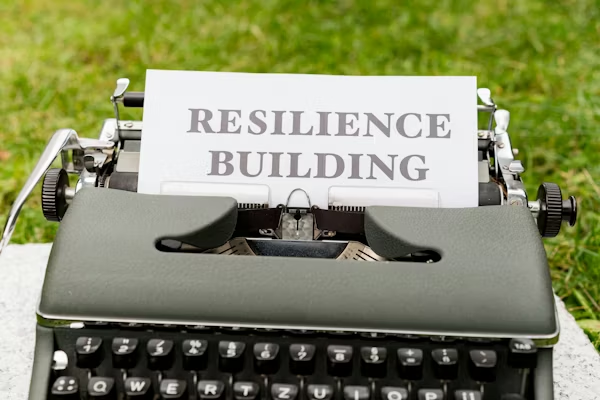
Building Emotional Resilience: Strengthening Psychological Coping in the Indian Context In recent years, conversations around emotional resilience India, the need for effective coping skills India, and long-term mental health growth have gained increasing importance as individuals navigate uncertainty, pressure, and emotional overload. From academic competition and career instability to family responsibilities, societal expectations, and collective trauma, Indians across age groups are required to adapt continuously—often without adequate emotional support. While resilience is frequently misunderstood as toughness or emotional suppression, psychological resilience is actually about flexibility, recovery, and the ability to respond to stress without losing one’s sense of self. In the Indian context, resilience is often expected rather than taught. People are encouraged to “adjust,” “be strong,” or “manage somehow,” which can lead to emotional burnout rather than genuine coping. Understanding emotional resilience from a psychological lens allows individuals to move away from survival mode and toward sustainable emotional wellbeing. Building resilience is not about avoiding distress, it is about learning how to move through it with awareness, support, and self-compassion. Understanding Emotional Resilience from a Psychological Perspective What Is Emotional Resilience? Emotional resilience refers to the ability to adapt to stress, adversity, and emotional challenges while maintaining psychological stability and a sense of meaning. It does not mean the absence of emotional pain, but rather the capacity to recover, recalibrate, and grow through difficult experiences. Psychologically, resilience is shaped by a combination of internal factors (such as emotional regulation, self-beliefs, and coping strategies) and external factors (such as relationships, social support, and cultural context). Resilient individuals still experience sadness, fear, and frustration—but they are less likely to feel overwhelmed or permanently destabilised by them. A foundational explanation of psychological resilience can be explored here:https://en.wikipedia.org/wiki/Psychological_resilience Why Emotional Resilience Is Crucial in India Today High Pressure, Limited Emotional Processing Indian society places strong emphasis on performance, responsibility, and endurance. Emotional struggles are often minimised in favour of productivity or duty, leaving little room for processing stress or vulnerability. Collective and Intergenerational Stress Economic uncertainty, caregiving responsibilities, academic pressure, and unresolved generational trauma all contribute to cumulative emotional load. Stigma Around Emotional Support Seeking help is still associated with weakness for many, which delays the development of healthy coping systems. Rapid Social Change Urbanisation, digital exposure, shifting family structures, and career volatility demand constant emotional adjustment without structured emotional education. Common Myths About Emotional Resilience “Resilient people don’t feel emotions” In reality, resilient individuals feel deeply but regulate emotions effectively. “Resilience means handling everything alone” Healthy resilience includes knowing when to seek support. “Some people are just born resilient” Resilience is a learnable psychological skill, not a fixed trait. An accessible explainer on resilience and emotional coping can be viewed here:https://www.youtube.com/watch?v=NWH8N-BvhAw Core Psychological Components of Emotional Resilience Emotional Regulation The ability to notice, tolerate, and respond to emotions without suppression or overwhelm. Cognitive Flexibility Resilient individuals can reframe setbacks without catastrophising or rigid thinking. Self-Compassion Treating oneself with kindness during failure or stress rather than harsh self-criticism. Sense of Agency Believing that one has influence over responses, even when circumstances cannot be controlled. Secure Support Systems Healthy relationships provide emotional grounding and perspective. Emotional Resilience Across Indian Life Stages Students and Young Adults Academic pressure, identity confusion, and fear of failure demand resilience skills that are rarely taught in formal education. Working Professionals Burnout, job insecurity, and work-life imbalance require emotional recovery mechanisms beyond productivity hacks. Parents and Caregivers Balancing emotional labour, responsibility, and limited personal space makes resilience essential for mental health. Older Adults Health concerns, loss of role identity, and changing family dynamics test emotional adaptability. Case Scenario: A Resilience Gap Arjun, a 34-year-old professional, appears outwardly successful but feels emotionally exhausted. He handles responsibilities efficiently yet struggles with irritability, poor sleep, and emotional numbness. He believes resilience means “pushing through.” In therapy, Arjun learns that his coping system relies on suppression rather than regulation. Building emotional resilience helps him identify stress signals early, respond more compassionately, and recover without burnout. How Therapy Supports Emotional Resilience Building Awareness of Emotional Patterns Therapy helps individuals recognise emotional triggers, stress responses, and habitual coping strategies. Developing Healthier Coping Skills Clients learn grounding techniques, emotional processing skills, and adaptive thinking patterns. Reducing Self-Criticism Resilience grows when internal dialogue becomes supportive rather than punitive. Strengthening Identity and Values Therapy reconnects individuals with purpose and meaning beyond performance. Culturally sensitive platforms like PsyQuench offer counselling services that focus on emotional resilience, coping skill development, and long-term mental health growth within the Indian context. One relevant service can be explored here:https://psyquench.com/services/counselling While platforms such as Amaha are often referenced in global discussions on resilience and mental health, culturally attuned therapy remains especially important for Indian clients. Practical, Psychology-Based Ways to Build Emotional Resilience 1. Emotional Literacy Learning to name emotions accurately reduces internal confusion and distress. 2. Stress Regulation Practices Breathing exercises, grounding techniques, and nervous system regulation support emotional stability. 3. Cognitive Reframing Challenging catastrophic or rigid thinking improves adaptability. 4. Boundary Setting Protecting emotional and mental energy prevents chronic overwhelm. 5. Meaning-Making Connecting stress to values or growth supports long-term resilience. Resilience vs Survival Mode Many Indians function in survival mode—managing responsibilities while emotionally depleted. True resilience allows recovery, rest, and reflection. Survival prioritises endurance; resilience prioritises sustainability. Role of Families, Schools, and Workplaces Emotional resilience should not be an individual burden alone. Families can model emotional expression, schools can teach coping skills, and workplaces can normalise mental health conversations. Mental health professionals play a critical role in translating psychological concepts into everyday coping tools. Summary This blog explored emotional resilience within the Indian context, highlighting why traditional expectations of endurance often replace healthy coping. It explained emotional resilience as a psychological skill involving emotional regulation, cognitive flexibility, self-compassion, and support systems. Through culturally relevant examples and therapeutic insight, the blog emphasised how resilience can be intentionally built through awareness, coping skills, and therapy—supporting long-term mental health growth rather than emotional survival. Conclusion Emotional resilience is not about being unbreakable. it is about


