
Neuropsychology Courses Online: Scope and Career Path
Neuropsychology is one of the most fascinating and rapidly growing areas within psychology. It focuses on the relationship between the brain, behavior, cognition, and emotional functioning. With increasing awareness of neurological conditions, brain health, and mental health disorders such as depression, interest in neuropsychology courses online has grown significantly. Students, psychology graduates, and professionals are exploring this specialization to understand how brain functioning influences behavior and emotional well-being.
The rise of digital education has made neuropsychology courses online accessible to learners across India and globally. These courses offer foundational knowledge of brain structures, cognitive processes, and psychological assessment. For those interested in clinical psychology, research, or rehabilitation, neuropsychology provides a pathway that combines science and mental health practice.
Understanding the brain’s role in mental health conditions such as depression is especially important. Neuropsychology helps professionals understand how cognitive processes, emotional regulation, and neurological factors interact. This guide explores the scope, career opportunities, and learning pathways related to neuropsychology courses online, helping learners make informed decisions about this specialization.
To understand how neuropsychology connects brain function and behavior, you can watch this overview: What is Neuropsychology
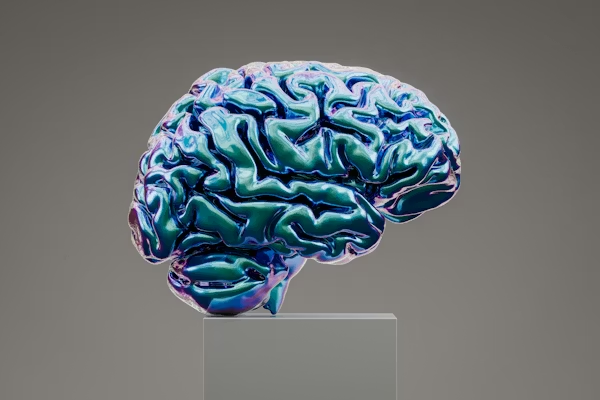
What Is Neuropsychology?
Neuropsychology is the study of how the brain influences cognition, emotions, and behavior. It examines how brain injuries, neurological conditions, and developmental factors affect psychological functioning. Neuropsychologists work with individuals experiencing conditions such as traumatic brain injury, dementia, ADHD, and mood disorders including depression.
The field combines neuroscience and psychology to understand how brain systems relate to behavior and mental processes. Neuropsychology involves assessment, research, and rehabilitation.
With the expansion of digital learning, neuropsychology courses online now introduce students to brain anatomy, cognitive processes, and assessment techniques. These courses provide a foundation for advanced clinical or research training.
Why Neuropsychology Courses Online Are Growing
Interest in neuropsychology courses online has increased due to several factors. First, there is growing awareness of neurological and mental health conditions. Second, the integration of neuroscience into psychology has created new career opportunities. Third, online education allows students to explore specialized topics without relocating.
Students often begin with introductory courses to understand brain functioning and cognitive processes. Professionals in psychology, counselling, or education may take advanced courses to expand their knowledge. Online programs make it easier to balance learning with other responsibilities.
Another factor driving interest is the relevance of neuropsychology to mental health treatment. Understanding how brain processes influence mood and behavior helps professionals provide more effective support. This makes neuropsychology courses online valuable for both academic and clinical development.
Types of Neuropsychology Courses Online
There are several types of neuropsychology courses online, each designed for different learning needs.
Introductory courses provide foundational knowledge of brain anatomy and cognitive processes. Certification programs focus on specific areas such as neuropsychological assessment or cognitive rehabilitation. Advanced courses explore topics like neurodevelopmental disorders, brain injury, and emotional regulation.
Some universities offer online or hybrid master’s programs that include neuropsychology modules. These programs provide deeper academic training and may include research components. However, clinical neuropsychology roles usually require advanced degrees and supervised practice.
Skills Developed Through Neuropsychology Courses
Enrolling in neuropsychology courses online helps learners develop a range of skills. Understanding brain-behavior relationships is central. Students learn about memory, attention, executive functioning, and emotional regulation.
Assessment skills are also emphasized. Neuropsychology involves evaluating cognitive functioning and identifying patterns of impairment or strength. Courses may introduce basic assessment tools and interpretation methods.
Research literacy is another important skill. Neuropsychology relies heavily on scientific research. Students learn to interpret studies and apply findings to practice. Ethical awareness and communication skills are also essential.
These skills support careers in clinical psychology, rehabilitation, research, and education.
Career Opportunities After Neuropsychology Courses
Completing neuropsychology courses online can open various career pathways. Entry-level roles include research assistants, rehabilitation support staff, and mental health facilitators. These roles provide exposure to applied neuropsychology.
With advanced degrees, individuals can work as clinical neuropsychologists, conducting assessments and providing rehabilitation. Others may work in academic research or teaching. Neuropsychology is also relevant in fields such as special education and occupational therapy.
Online courses often serve as a foundation for further study. Many learners pursue master’s or doctoral programs after completing introductory training. Continuous learning and supervision are essential for professional roles.
Challenges of Online Neuropsychology Learning
While neuropsychology courses online offer flexibility, they also have limitations. Practical assessment skills and clinical exposure are difficult to replicate fully online. Learners should seek opportunities for internships or supervised practice.
Another challenge is the complexity of the subject. Neuropsychology involves detailed scientific concepts. Students must dedicate time to understanding brain structures and functions. Structured programs with interactive sessions can help maintain engagement.
Understanding career requirements is also important. Online courses alone may not qualify individuals for clinical neuropsychology roles. Advanced degrees and supervised training are usually required.
Also Read: Neuropsychology – Wikipedia
The Role of Practical Exposure
Practical exposure is essential for neuropsychology careers. Observing assessments, working in rehabilitation settings, and engaging in research projects help students apply theoretical knowledge. Combining neuropsychology courses online with internships provides balanced training.
Programs like Dhairyada help bridge the gap between theory and practice by offering exposure to real-world psychological work.
How to Choose the Right Course
Choosing the right neuropsychology courses online requires clarity about career goals. Beginners may start with introductory courses. Those aiming for clinical roles should plan for advanced degrees and supervised training.
Check course credibility, curriculum, and practical components. Look for programs that include interactive sessions and assignments. Consider how the course fits into your long-term career path.
Summary
The field of neuropsychology offers exciting opportunities for students and professionals interested in brain-behavior relationships. Neuropsychology courses online provide accessible pathways to learn about cognitive processes, emotional regulation, and neurological conditions.
While online courses offer flexibility, combining them with practical exposure and advanced study is essential for professional growth. With the right training and commitment, neuropsychology can lead to meaningful careers in clinical practice, research, and rehabilitation.
Conclusion
Neuropsychology is a dynamic and evolving field that connects neuroscience and mental health. The availability of neuropsychology courses online has made this specialization more accessible to learners across India and beyond. Whether you are a student exploring psychology or a professional seeking specialization, online courses provide a valuable starting point.
However, long-term success in neuropsychology requires continuous learning, practical experience, and advanced qualifications. With the right training and dedication, learners can build rewarding careers in understanding and supporting brain health and behavior.
Explore structured learning and applied exposure through PsyQuench to begin building your career in neuropsychology.
Frequently Asked Questions (FAQs)
1. What are neuropsychology courses online and who should take them?
Neuropsychology courses online teach the relationship between brain functioning and behavior. They are suitable for psychology students, mental health professionals, and individuals interested in neuroscience. These courses provide foundational knowledge and prepare learners for advanced study.
2. Can PsyQuench services help learners interested in neuropsychology?
Yes. PsyQuench services provide applied learning and exposure to psychological practice. Students interested in neuropsychology can benefit from skill-based training and case discussions that support understanding of real-world mental health work.
3. Are PsyQuench services suitable for beginners exploring neuropsychology?
Yes. PsyQuench services support learners at different stages, including beginners. Structured courses help students build foundational knowledge before pursuing advanced specialization.
4. Are neuropsychology courses online enough for clinical practice?
Online courses provide foundational knowledge but are not sufficient for clinical neuropsychology roles. Advanced degrees and supervised training are required for professional practice.
5. How long does it take to build a career in neuropsychology?
Building a career in neuropsychology typically involves undergraduate study, postgraduate specialization, and supervised training. This process may take several years, depending on career goals.
6. What career options are available after neuropsychology courses?
Career options include research roles, rehabilitation support, academic teaching, and further study in clinical neuropsychology. With advanced qualifications, individuals can work in hospitals and research centers.
7. How do neuropsychology courses help with understanding depression?
Neuropsychology courses explain how brain processes influence mood and cognition. This helps professionals understand depression from a biological and psychological perspective and develop effective interventions.
8. Should I choose online or offline neuropsychology education?
The choice depends on your goals. Online courses offer flexibility and foundational knowledge. Offline programs often provide more practical exposure. Many learners combine both for comprehensive training.


