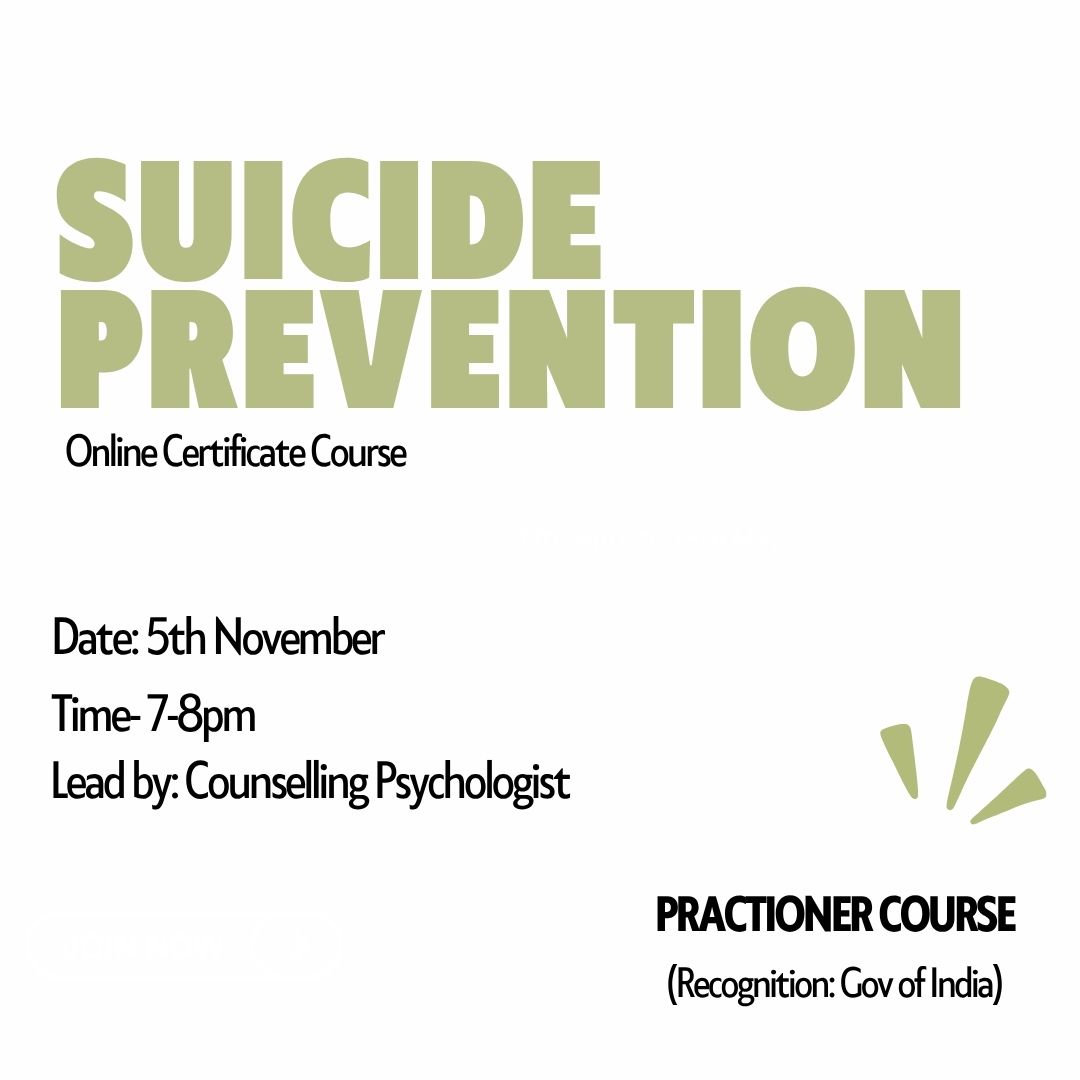
 Time- 7pm to 8pm
 Starts- 5th November to 8th December
 Access to recording for 3 month
Description
Eligibility
Anyone interested in learning about Suicide Intervention, Psychology Students, Counsellors, Psychologists, Psychiatrists, Social Workers, Students, Educators, PhD Scholars
What is Suicide Intervention?
Suicide intervention and prevention refer to the timely actions taken to identify warning signs, provide emotional support, and connect individuals with professional help to reduce the risk of suicide. These approaches focus on enhancing mental well-being, building coping strategies, and promoting hope during a crisis. Mental health professionals use evidence-based techniques to ensure safety and long-term recovery.
PROCESS OF REGISTRATION

MODULE 1: ORIENTATION TO SUICIDE
Goal: Build clarity around suicide-related terminology and recognize how suicide differs from self-harm. Learn to identify early warning signs and risk behaviors while debunking common myths about suicide.
|
MODULE 2: THEORIES AND ASSESSMENTGoal: Understand psychological theories that explain suicidal behavior and their clinical implications. Gain familiarity with practical risk assessment frameworks and screening tools used in clinical and community settings.
|
| MODULE 3: MANAGING RISK
Goal: Learn to navigate confidentiality while upholding client safety in high-risk situations. Apply the QPR model and supportive strategies to intervene appropriately during a crisis.
|
| MODULE 4: BEYOND THE SESSION
Goal: Understand your legal and ethical obligations when working with suicidal individuals. Reflect on and adopt self-care practices to prevent burnout and maintain emotional resilience.
|
Practical Work in all Modules
|
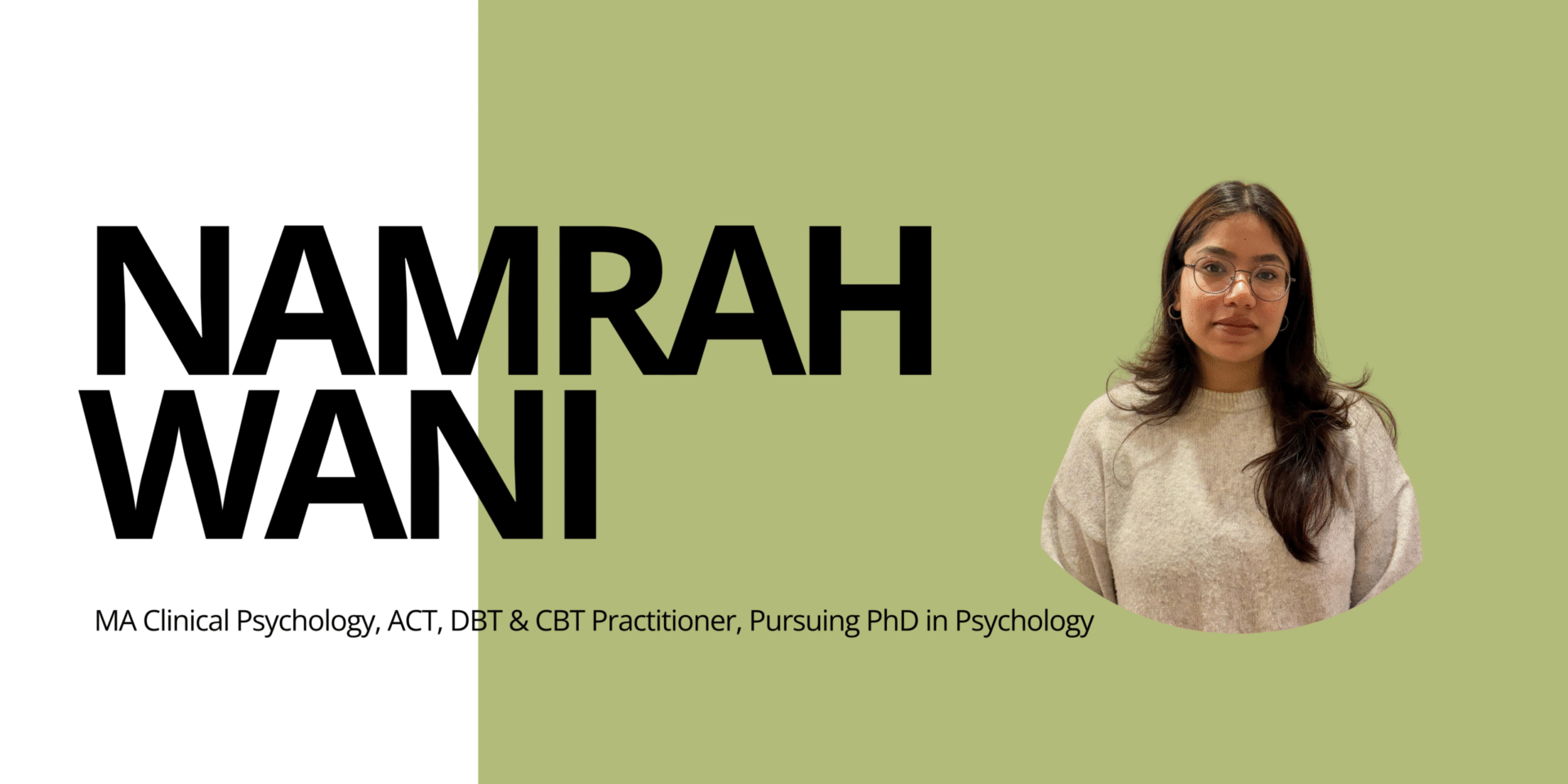
KNOW YOUR TRAINER